

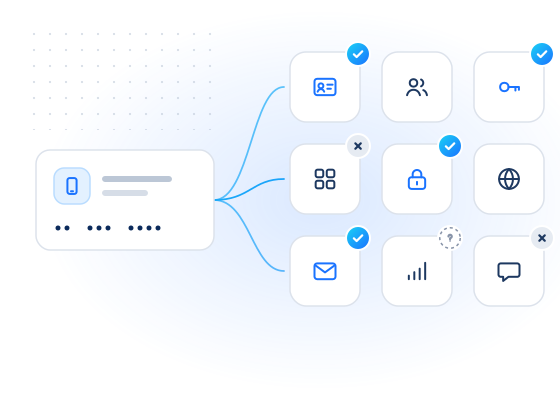

The X check indicates whether an account on X, the platform formerly called Twitter, is associated with a phone number. It answers registered: true, false or null (unknown) with the time of the check. It runs in real time and in bulk jobs, for numbers from any country, and returns no handle, name, photo or post.
What does the X check tell you?
It tells you whether the phone number is linked to an X account. On X the phone number is optional. People can register with an e-mail address and add a number later to sign in, recover the account or pass a security check. A true answer means an account is associated with the number now.
registered: true: an X account is associated with the number.registered: false: a conclusive "no".registered: null: no conclusive answer (status,reason). You are not charged.
Two platform changes affect how you should read the answer. Twitter was renamed X in July 2023. Aliases x and twitter therefore both work, and older integrations that send twitter keep running. And since 20 March 2023, text-message two-factor authentication has been available only to paying subscribers (X/Twitter announcement, February 2023). Fewer people have a reason to attach a number than before, so a false answer is common and fairly neutral.
Who uses it, and why?
Teams use the X check as a supporting signal for account security and sign-up quality, usually in a multi-check with other platforms.
- Account-security reviews. When a user changes the phone number on their account with you, a number with some history on large platforms is a mildly reassuring sign. A number with no footprint anywhere may deserve a second look. See account security.
- Sign-up protection. Together with Instagram, Facebook and a carrier lookup, it helps separate numbers people actually use from numbers set up for a single sign-up.
- Data hygiene. Along with other checks, it helps you judge whether old contact numbers you are allowed to process are still in use.
If you collect e-mail addresses rather than numbers, the X e-mail check answers the same question for an address. It runs in bulk jobs only.
What do you get back?
Each number gets one result under checks["x.registered"], with no extra attributes.
| Field | Type | Meaning |
|---|---|---|
registered | boolean or null | true account associated, false none, null unknown |
status | enum | completed, pending, unknown, unsupported_country or failed |
confidence / confidence_score | enum / 0–1 | How sure the answer is; null when not conclusive |
checked_at | timestamp | When the answer was obtained |
cached / age_seconds | boolean / integer | Served from your account's cache, and its age |
billed | boolean | Whether this check was charged |
reason | string or null | Why an answer is not conclusive |
How is it billed?
You pay per number checked, and only for conclusive answers. You're not charged for inconclusive results (unknown, unsupported country, timeout, invalid, duplicate). Real-time and bulk checks are priced separately. See pricing. Cache hits inside the freshness window are free, and max_age: 0 forces a fresh, billed check.
What are the limits?
The X check runs in real time (POST /v1/lookup, up to 100 identifiers) and in bulk jobs (POST /v1/jobs, up to 50,000 per job), for numbers from every country.
- A request can hold up to 20 checks. Numbers × checks is capped at 2,000 per lookup and 100,000 per job.
- Requests that look like sequential number ranges or generated e-mail lists are rejected (
suspected_enumeration). - A daily cap per account applies (
GET /v1/limits). - Invalid, duplicate and suppressed numbers are reported per row and never checked.
How do I use it responsibly?
X is widely used under pseudonyms, and people have good reasons for that. Never use this check to link a number to a pseudonymous account or to find out who is behind one. We don't support that: there are no reverse lookups, and the answer is only yes, no or unknown. Check only numbers you have a lawful reason to process. The acceptable use policy forbids stalking, harassment, profiling and unsolicited messaging. Anyone can object at /opt-out.
Example request
With a test key, +447700900001 answers "registered". See test mode.
curl https://api.mobilevalidate.com/v1/lookup \
  -H "Authorization: Bearer mv_test_publicSandboxn9ZgneuhR1B9CRfKG3fulym" \
  -H "Content-Type: application/json" \
  -d '{"numbers":["+447700900001"],"checks":["x"]}'
// npm install mobilevalidate · Node.js 20+ · save as check.mjs and run: node check.mjs
import { MobileValidate } from "mobilevalidate";
// Omit apiKey to read MOBILEVALIDATE_API_KEY from the environment.
const mv = new MobileValidate({ apiKey: "mv_test_publicSandboxn9ZgneuhR1B9CRfKG3fulym" });
const { data, error } = await mv.lookup({
numbers: ["+447700900001"],
checks: ["x"],
});
if (error) console.error(error.code, error.message);
else console.dir(data.results, { depth: null });// Node.js 18+, Deno, Bun or the browser console (ES module: save as .mjs or use "type": "module").
const res = await fetch("https://api.mobilevalidate.com/v1/lookup", {
method: "POST",
headers: {
Authorization: "Bearer mv_test_publicSandboxn9ZgneuhR1B9CRfKG3fulym",
"Content-Type": "application/json",
},
body: JSON.stringify({ numbers: ["+447700900001"], checks: ["x"] }),
});
console.log(res.status, res.headers.get("x-request-id"));
console.dir(await res.json(), { depth: null });# pip install mobilevalidate-sdk
from mobilevalidate import MobileValidate
# Omit api_key to read MOBILEVALIDATE_API_KEY from the environment.
mv = MobileValidate(api_key="mv_test_publicSandboxn9ZgneuhR1B9CRfKG3fulym")
result = mv.lookup(numbers=["+447700900001"], checks=["x"])
print(result)<?php
$ch = curl_init('https://api.mobilevalidate.com/v1/lookup');
curl_setopt_array($ch, [
CURLOPT_POST => true,
CURLOPT_RETURNTRANSFER => true,
CURLOPT_HTTPHEADER => [
'Authorization: Bearer mv_test_publicSandboxn9ZgneuhR1B9CRfKG3fulym',
'Content-Type: application/json',
],
CURLOPT_POSTFIELDS => json_encode([
'numbers' => ['+447700900001'],
'checks' => ['x'],
]),
]);
$response = curl_exec($ch);
echo curl_getinfo($ch, CURLINFO_RESPONSE_CODE), PHP_EOL, $response, PHP_EOL;package main
import (
"fmt"
"io"
"net/http"
"strings"
)
func main() {
body := strings.NewReader(`{"numbers":["+447700900001"],"checks":["x"]}`)
req, err := http.NewRequest("POST", "https://api.mobilevalidate.com/v1/lookup", body)
if err != nil {
panic(err)
}
req.Header.Set("Authorization", "Bearer mv_test_publicSandboxn9ZgneuhR1B9CRfKG3fulym")
req.Header.Set("Content-Type", "application/json")
res, err := http.DefaultClient.Do(req)
if err != nil {
panic(err)
}
defer res.Body.Close()
out, _ := io.ReadAll(res.Body)
fmt.Println(res.Status, string(out))
}require "net/http"
require "json"
uri = URI("https://api.mobilevalidate.com/v1/lookup")
req = Net::HTTP::Post.new(uri)
req["Authorization"] = "Bearer mv_test_publicSandboxn9ZgneuhR1B9CRfKG3fulym"
req["Content-Type"] = "application/json"
req.body = JSON.generate({
"numbers" => ["+447700900001"],
"checks" => ["x"]
})
res = Net::HTTP.start(uri.host, uri.port, use_ssl: true) { |http| http.request(req) }
puts res.code, res.bodyRuns as pasted with the public sandbox key, which answers the test values only. In the SDKs, omit the key to use MOBILEVALIDATE_API_KEY.
Response (excerpt, test mode: the first item of results):
{
  "kind": "phone",
  "input": "+447700900001",
  "e164": "+447700900001",
  "country": "GB",
  "number_status": "valid",
  "checks": {
    "x.registered": {
      "service": "x.registered",
      "status": "completed",
      "registered": true,
      "attributes": null,
      "confidence": "high",
      "confidence_score": 0.99,
      "checked_at": "2026-09-25T14:25:30.665Z",
      "cached": false,
      "age_seconds": 0,
      "billed": false,
      "reason": null,
      "poll_after_ms": null
    }
  },
  "test": true
}
Try it now
Realtime lookup via POST /v1/lookup. Every example runs as pasted: it uses the public sandbox key, which answers the test values for free. In the SDKs, omit the key to use MOBILEVALIDATE_API_KEY.
curl https://api.mobilevalidate.com/v1/lookup \
  -H "Authorization: Bearer mv_test_publicSandboxn9ZgneuhR1B9CRfKG3fulym" \
  -H "Content-Type: application/json" \
  -d '{"numbers":["+447700900001"],"checks":["x.registered"]}'
// npm install mobilevalidate · Node.js 20+ · save as check.mjs and run: node check.mjs
import { MobileValidate } from "mobilevalidate";
// Omit apiKey to read MOBILEVALIDATE_API_KEY from the environment.
const mv = new MobileValidate({ apiKey: "mv_test_publicSandboxn9ZgneuhR1B9CRfKG3fulym" });
const { data, error } = await mv.lookup({
numbers: ["+447700900001"],
checks: ["x.registered"],
});
if (error) console.error(error.code, error.message);
else console.dir(data.results, { depth: null });// Node.js 18+, Deno, Bun or the browser console (ES module: save as .mjs or use "type": "module").
const res = await fetch("https://api.mobilevalidate.com/v1/lookup", {
method: "POST",
headers: {
Authorization: "Bearer mv_test_publicSandboxn9ZgneuhR1B9CRfKG3fulym",
"Content-Type": "application/json",
},
body: JSON.stringify({
numbers: ["+447700900001"],
checks: ["x.registered"],
}),
});
console.log(res.status, res.headers.get("x-request-id"));
console.dir(await res.json(), { depth: null });# pip install mobilevalidate-sdk
from mobilevalidate import MobileValidate
# Omit api_key to read MOBILEVALIDATE_API_KEY from the environment.
mv = MobileValidate(api_key="mv_test_publicSandboxn9ZgneuhR1B9CRfKG3fulym")
result = mv.lookup(numbers=["+447700900001"], checks=["x.registered"])
print(result)<?php
$ch = curl_init('https://api.mobilevalidate.com/v1/lookup');
curl_setopt_array($ch, [
CURLOPT_POST => true,
CURLOPT_RETURNTRANSFER => true,
CURLOPT_HTTPHEADER => [
'Authorization: Bearer mv_test_publicSandboxn9ZgneuhR1B9CRfKG3fulym',
'Content-Type: application/json',
],
CURLOPT_POSTFIELDS => json_encode([
'numbers' => ['+447700900001'],
'checks' => ['x.registered'],
]),
]);
$response = curl_exec($ch);
echo curl_getinfo($ch, CURLINFO_RESPONSE_CODE), PHP_EOL, $response, PHP_EOL;package main
import (
"fmt"
"io"
"net/http"
"strings"
)
func main() {
body := strings.NewReader(`{"numbers":["+447700900001"],"checks":["x.registered"]}`)
req, err := http.NewRequest("POST", "https://api.mobilevalidate.com/v1/lookup", body)
if err != nil {
panic(err)
}
req.Header.Set("Authorization", "Bearer mv_test_publicSandboxn9ZgneuhR1B9CRfKG3fulym")
req.Header.Set("Content-Type", "application/json")
res, err := http.DefaultClient.Do(req)
if err != nil {
panic(err)
}
defer res.Body.Close()
out, _ := io.ReadAll(res.Body)
fmt.Println(res.Status, string(out))
}require "net/http"
require "json"
uri = URI("https://api.mobilevalidate.com/v1/lookup")
req = Net::HTTP::Post.new(uri)
req["Authorization"] = "Bearer mv_test_publicSandboxn9ZgneuhR1B9CRfKG3fulym"
req["Content-Type"] = "application/json"
req.body = JSON.generate({
"numbers" => ["+447700900001"],
"checks" => ["x.registered"]
})
res = Net::HTTP.start(uri.host, uri.port, use_ssl: true) { |http| http.request(req) }
puts res.code, res.body// .mcp.json (Claude Code), ~/.cursor/mcp.json (Cursor) or .vscode/mcp.json ("servers" instead of "mcpServers")
{
"mcpServers": {
"mobilevalidate": {
"type": "http",
"url": "https://mcp.mobilevalidate.com/mcp",
"headers": { "Authorization": "Bearer ${MOBILEVALIDATE_API_KEY}" }
}
}
}
// Then ask your agent, e.g.:
// "Check +447700900001 with x.registered" → tool: lookup_numbersThe hosted MCP server is live for customers with an agent key (mv_agent_…) or a test key. Or run it locally with npx -y @mobilevalidate/mcp.
Real test-mode result for this check
{
  "service": "x.registered",
  "status": "completed",
  "registered": true,
  "attributes": null,
  "confidence": "high",
  "confidence_score": 0.99,
  "checked_at": "2026-09-25T14:25:28.979Z",
  "cached": false,
  "age_seconds": 0,
  "billed": false,
  "reason": null,
  "poll_after_ms": null
}
What you get
Fields of checks["x.registered"], generated from the public service catalog.
| Field | Type | Meaning |
|---|---|---|
| registered | boolean | null | true = found, false = not found, null = unknown (not charged). |
| status | enum | completed, pending, unknown, unsupported_country or failed. |
| checked_at | timestamp | When the answer was obtained. |
Frequently asked questions
Should I use the code x or twitter?
Either one. Both aliases map to the service code x.registered. Results always use the full code, so they appear under checks["x.registered"].
Why do many X accounts have no phone number?
X accepts sign-up with an e-mail address, and adding a phone number is optional. Since March 2023, text-message two-factor authentication has been limited to paying subscribers, so fewer accounts need a number for 2FA.
Does the check reveal the X handle?
No. It only indicates whether an X account is associated with the number. Handles, names, photos and posts are never returned.
Can I check e-mail addresses for X accounts?
Yes, with the separate x.email service. It runs in bulk jobs only (POST /v1/jobs), while this phone check also works in real time.
Can I use this to find out who is behind an anonymous account?
No. There are no reverse lookups: we never map a number to an account or an account to a person. The acceptable use policy forbids de-anonymisation, stalking and harassment.