

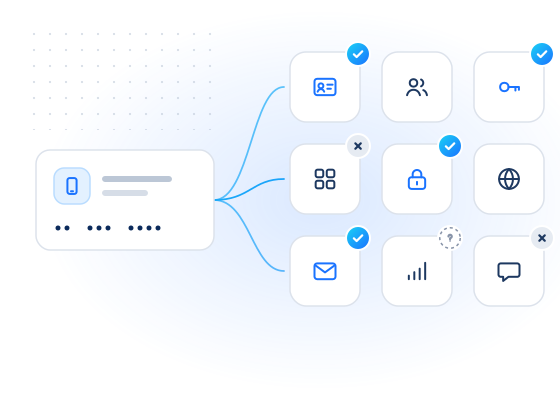
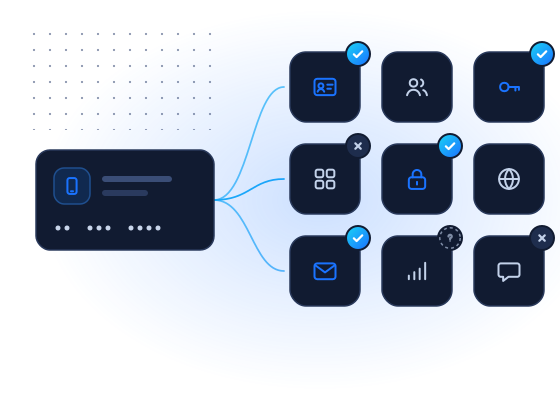
The Amazon check indicates whether an Amazon customer account is associated with a phone number. It runs in real time and in bulk jobs, for numbers from any country, and answers registered: true, false or null (unknown) with the time of the check. It never returns names, addresses, orders or payment details.
What does the Amazon check tell you?
It tells you whether a phone number is linked to an Amazon account. Amazon lets customers sign in with a mobile number, and in some marketplaces an account can be created with a mobile number instead of an e-mail address. The same customer account is typically used across Amazon's shopping sites and its other consumer services.
registered: true: an Amazon account is associated with the number.registered: false: a conclusive "no", including customers who registered with e-mail only.registered: null: no conclusive answer. Not charged.
Who uses it, and why?
Online shops, marketplaces and delivery services use the Amazon check as one fraud signal among several.
- Checkout and sign-up protection. A number that has been used as a shopping login has probably received delivery notifications and one-time codes, which suggests a person's everyday number. See OTP and sign-up fraud.
- Promotion and trial abuse. Batches of new accounts whose numbers have no history on large consumer platforms can be sent for review, with the carrier lookup added for line type.
For addresses rather than numbers, use the Amazon e-mail check.
What do you get back?
Each number gets one result under checks["amazon.registered"], with no extra attributes.
| Field | Type | Meaning |
|---|---|---|
registered | boolean or null | true account associated, false none, null unknown |
status | enum | completed, pending, unknown, unsupported_country or failed |
confidence / confidence_score | enum / 0–1 | How sure the answer is |
checked_at | timestamp | When the answer was obtained |
cached / billed | boolean | Served from cache; charged or not |
reason | string or null | Why an answer is not conclusive |
How is it billed?
You pay per number checked, only for conclusive answers. You're not charged for inconclusive results (unknown, unsupported country, timeout, invalid, duplicate). Real-time and bulk checks are priced separately. See pricing. Cache hits are free, and max_age: 0 forces a fresh, billed check.
What are the limits?
- Real time (
POST /v1/lookup, up to 100 identifiers) and bulk jobs (POST /v1/jobs, up to 50,000 per job), for numbers from every country. - Up to 20 checks per request. Numbers × checks is capped at 2,000 per lookup and 100,000 per job.
- Requests that look like sequential number ranges or generated e-mail lists are rejected.
- A daily cap per account applies (
GET /v1/limits).
How do I use it responsibly?
Treat the answer as a risk signal about a number, not a judgement about a person. Never use it for eligibility decisions. Check only numbers you have a lawful basis to process. The acceptable use policy forbids profiling, working through number lists and unsolicited messaging. People can object at /opt-out.
Example request
With a test key, +447700900001 answers "registered". See test mode.
curl https://api.mobilevalidate.com/v1/lookup \
  -H "Authorization: Bearer mv_test_publicSandboxn9ZgneuhR1B9CRfKG3fulym" \
  -H "Content-Type: application/json" \
  -d '{"numbers":["+447700900001"],"checks":["amazon"]}'
// npm install mobilevalidate · Node.js 20+ · save as check.mjs and run: node check.mjs
import { MobileValidate } from "mobilevalidate";
// Omit apiKey to read MOBILEVALIDATE_API_KEY from the environment.
const mv = new MobileValidate({ apiKey: "mv_test_publicSandboxn9ZgneuhR1B9CRfKG3fulym" });
const { data, error } = await mv.lookup({
numbers: ["+447700900001"],
checks: ["amazon"],
});
if (error) console.error(error.code, error.message);
else console.dir(data.results, { depth: null });// Node.js 18+, Deno, Bun or the browser console (ES module: save as .mjs or use "type": "module").
const res = await fetch("https://api.mobilevalidate.com/v1/lookup", {
method: "POST",
headers: {
Authorization: "Bearer mv_test_publicSandboxn9ZgneuhR1B9CRfKG3fulym",
"Content-Type": "application/json",
},
body: JSON.stringify({
numbers: ["+447700900001"],
checks: ["amazon"],
}),
});
console.log(res.status, res.headers.get("x-request-id"));
console.dir(await res.json(), { depth: null });# pip install mobilevalidate-sdk
from mobilevalidate import MobileValidate
# Omit api_key to read MOBILEVALIDATE_API_KEY from the environment.
mv = MobileValidate(api_key="mv_test_publicSandboxn9ZgneuhR1B9CRfKG3fulym")
result = mv.lookup(numbers=["+447700900001"], checks=["amazon"])
print(result)<?php
$ch = curl_init('https://api.mobilevalidate.com/v1/lookup');
curl_setopt_array($ch, [
CURLOPT_POST => true,
CURLOPT_RETURNTRANSFER => true,
CURLOPT_HTTPHEADER => [
'Authorization: Bearer mv_test_publicSandboxn9ZgneuhR1B9CRfKG3fulym',
'Content-Type: application/json',
],
CURLOPT_POSTFIELDS => json_encode([
'numbers' => ['+447700900001'],
'checks' => ['amazon'],
]),
]);
$response = curl_exec($ch);
echo curl_getinfo($ch, CURLINFO_RESPONSE_CODE), PHP_EOL, $response, PHP_EOL;package main
import (
"fmt"
"io"
"net/http"
"strings"
)
func main() {
body := strings.NewReader(`{"numbers":["+447700900001"],"checks":["amazon"]}`)
req, err := http.NewRequest("POST", "https://api.mobilevalidate.com/v1/lookup", body)
if err != nil {
panic(err)
}
req.Header.Set("Authorization", "Bearer mv_test_publicSandboxn9ZgneuhR1B9CRfKG3fulym")
req.Header.Set("Content-Type", "application/json")
res, err := http.DefaultClient.Do(req)
if err != nil {
panic(err)
}
defer res.Body.Close()
out, _ := io.ReadAll(res.Body)
fmt.Println(res.Status, string(out))
}require "net/http"
require "json"
uri = URI("https://api.mobilevalidate.com/v1/lookup")
req = Net::HTTP::Post.new(uri)
req["Authorization"] = "Bearer mv_test_publicSandboxn9ZgneuhR1B9CRfKG3fulym"
req["Content-Type"] = "application/json"
req.body = JSON.generate({
"numbers" => ["+447700900001"],
"checks" => ["amazon"]
})
res = Net::HTTP.start(uri.host, uri.port, use_ssl: true) { |http| http.request(req) }
puts res.code, res.bodyRuns as pasted with the public sandbox key, which answers the test values only. In the SDKs, omit the key to use MOBILEVALIDATE_API_KEY.
Response (excerpt, test mode: the first item of results):
{
  "kind": "phone",
  "input": "+447700900001",
  "e164": "+447700900001",
  "country": "GB",
  "number_status": "valid",
  "checks": {
    "amazon.registered": {
      "service": "amazon.registered",
      "status": "completed",
      "registered": true,
      "attributes": null,
      "confidence": "high",
      "confidence_score": 0.99,
      "checked_at": "2026-09-25T14:25:31.154Z",
      "cached": false,
      "age_seconds": 0,
      "billed": false,
      "reason": null,
      "poll_after_ms": null
    }
  },
  "test": true
}
Try it now
Realtime lookup via POST /v1/lookup. Every example runs as pasted: it uses the public sandbox key, which answers the test values for free. In the SDKs, omit the key to use MOBILEVALIDATE_API_KEY.
curl https://api.mobilevalidate.com/v1/lookup \
  -H "Authorization: Bearer mv_test_publicSandboxn9ZgneuhR1B9CRfKG3fulym" \
  -H "Content-Type: application/json" \
  -d '{"numbers":["+447700900001"],"checks":["amazon.registered"]}'
// npm install mobilevalidate · Node.js 20+ · save as check.mjs and run: node check.mjs
import { MobileValidate } from "mobilevalidate";
// Omit apiKey to read MOBILEVALIDATE_API_KEY from the environment.
const mv = new MobileValidate({ apiKey: "mv_test_publicSandboxn9ZgneuhR1B9CRfKG3fulym" });
const { data, error } = await mv.lookup({
numbers: ["+447700900001"],
checks: ["amazon.registered"],
});
if (error) console.error(error.code, error.message);
else console.dir(data.results, { depth: null });// Node.js 18+, Deno, Bun or the browser console (ES module: save as .mjs or use "type": "module").
const res = await fetch("https://api.mobilevalidate.com/v1/lookup", {
method: "POST",
headers: {
Authorization: "Bearer mv_test_publicSandboxn9ZgneuhR1B9CRfKG3fulym",
"Content-Type": "application/json",
},
body: JSON.stringify({
numbers: ["+447700900001"],
checks: ["amazon.registered"],
}),
});
console.log(res.status, res.headers.get("x-request-id"));
console.dir(await res.json(), { depth: null });# pip install mobilevalidate-sdk
from mobilevalidate import MobileValidate
# Omit api_key to read MOBILEVALIDATE_API_KEY from the environment.
mv = MobileValidate(api_key="mv_test_publicSandboxn9ZgneuhR1B9CRfKG3fulym")
result = mv.lookup(numbers=["+447700900001"], checks=["amazon.registered"])
print(result)<?php
$ch = curl_init('https://api.mobilevalidate.com/v1/lookup');
curl_setopt_array($ch, [
CURLOPT_POST => true,
CURLOPT_RETURNTRANSFER => true,
CURLOPT_HTTPHEADER => [
'Authorization: Bearer mv_test_publicSandboxn9ZgneuhR1B9CRfKG3fulym',
'Content-Type: application/json',
],
CURLOPT_POSTFIELDS => json_encode([
'numbers' => ['+447700900001'],
'checks' => ['amazon.registered'],
]),
]);
$response = curl_exec($ch);
echo curl_getinfo($ch, CURLINFO_RESPONSE_CODE), PHP_EOL, $response, PHP_EOL;package main
import (
"fmt"
"io"
"net/http"
"strings"
)
func main() {
body := strings.NewReader(`{"numbers":["+447700900001"],"checks":["amazon.registered"]}`)
req, err := http.NewRequest("POST", "https://api.mobilevalidate.com/v1/lookup", body)
if err != nil {
panic(err)
}
req.Header.Set("Authorization", "Bearer mv_test_publicSandboxn9ZgneuhR1B9CRfKG3fulym")
req.Header.Set("Content-Type", "application/json")
res, err := http.DefaultClient.Do(req)
if err != nil {
panic(err)
}
defer res.Body.Close()
out, _ := io.ReadAll(res.Body)
fmt.Println(res.Status, string(out))
}require "net/http"
require "json"
uri = URI("https://api.mobilevalidate.com/v1/lookup")
req = Net::HTTP::Post.new(uri)
req["Authorization"] = "Bearer mv_test_publicSandboxn9ZgneuhR1B9CRfKG3fulym"
req["Content-Type"] = "application/json"
req.body = JSON.generate({
"numbers" => ["+447700900001"],
"checks" => ["amazon.registered"]
})
res = Net::HTTP.start(uri.host, uri.port, use_ssl: true) { |http| http.request(req) }
puts res.code, res.body// .mcp.json (Claude Code), ~/.cursor/mcp.json (Cursor) or .vscode/mcp.json ("servers" instead of "mcpServers")
{
"mcpServers": {
"mobilevalidate": {
"type": "http",
"url": "https://mcp.mobilevalidate.com/mcp",
"headers": { "Authorization": "Bearer ${MOBILEVALIDATE_API_KEY}" }
}
}
}
// Then ask your agent, e.g.:
// "Check +447700900001 with amazon.registered" → tool: lookup_numbersThe hosted MCP server is live for customers with an agent key (mv_agent_…) or a test key. Or run it locally with npx -y @mobilevalidate/mcp.
Real test-mode result for this check
{
  "service": "amazon.registered",
  "status": "completed",
  "registered": true,
  "attributes": null,
  "confidence": "high",
  "confidence_score": 0.99,
  "checked_at": "2026-09-25T14:25:29.004Z",
  "cached": false,
  "age_seconds": 0,
  "billed": false,
  "reason": null,
  "poll_after_ms": null
}
What you get
Fields of checks["amazon.registered"], generated from the public service catalog.
| Field | Type | Meaning |
|---|---|---|
| registered | boolean | null | true = found, false = not found, null = unknown (not charged). |
| status | enum | completed, pending, unknown, unsupported_country or failed. |
| checked_at | timestamp | When the answer was obtained. |
Frequently asked questions
Does the check reveal orders, addresses or payment data?
No. It only indicates whether an Amazon account is associated with the number. No name, address, order history or payment information is returned.
Why would a regular Amazon customer come back as not registered?
Amazon accounts can be created with an e-mail address, and a phone number is not always attached. False means no account is associated with this particular number.
Is there an e-mail version?
Yes. The amazon.email service answers the same question for an e-mail address, also in real time.
Can I check sellers or business accounts separately?
No. The check does not distinguish account types. It answers only whether an Amazon account is associated with the number.