On this page
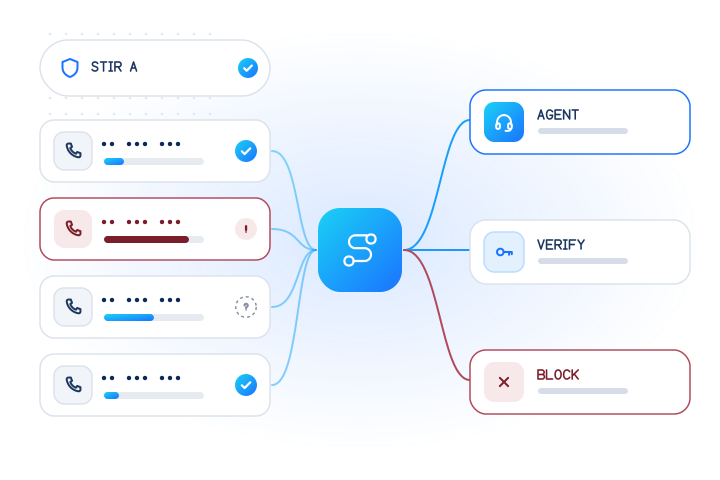
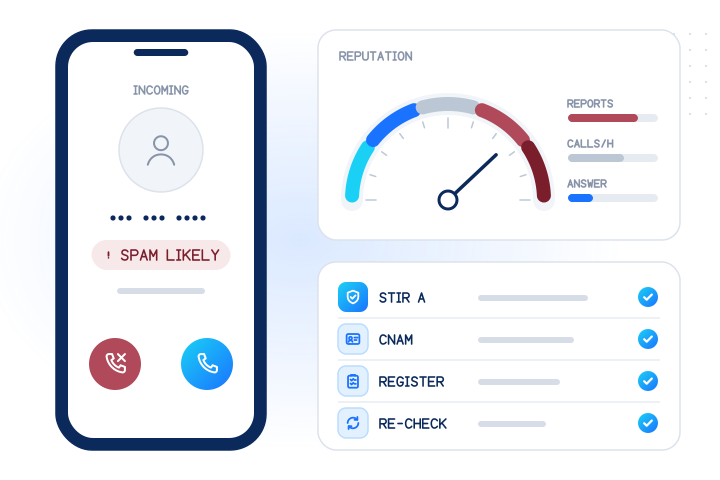
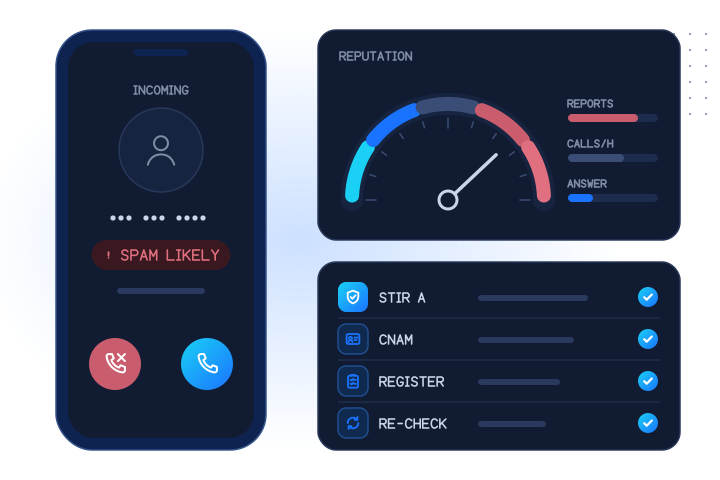
A "Spam Likely" label means the analytics engine behind the called person's carrier or app scored your calls as probably unwanted. The score comes from calling patterns, complaints and caller-ID signals, not from what you intend. Legitimate businesses fix it by getting A-level STIR/SHAKEN attestation, registering their numbers, correcting call patterns and checking each number's reputation.
This guide is for businesses fixing false labels on their own outbound calls to people who expect them. It doesn't cover getting around labels. Rotating numbers to escape a label is evasion: it doesn't fix the cause, and it can taint every new number.
What makes a carrier label a number "Spam Likely"?
Each US carrier, and many call-blocking apps, runs analytics that score incoming calls. Labeling services "display categories … such as 'spam' or 'scam likely' on the caller ID display" (FCC, 2026). There is no shared list and no single owner of the label. The same number can look clean on one network and be labeled on another.
The FCC has described the kind of signals "reasonable analytics" may use. They include "large bursts of calls in a short timeframe; low average call duration; low call completion ratios; invalid numbers placing a large volume of calls; common Caller ID Name (CNAM) values across voice service providers; a large volume of complaints related to a suspect line; sequential dialing patterns; neighbor spoofing patterns" (FCC 19-51, 2019, para. 35).
None of these are about intent. A clinic that calls 400 patients in an hour from a brand-new number, with half the calls unanswered, looks like a robocaller to a model that sees only the traffic. Our analysis of 362,116 FTC complaints shows why engines weight patterns over single numbers: 92.5% of reported caller numbers appeared in just one complaint (our research).
Which calling patterns trigger labels?
Most false labels on legitimate numbers come from how the calls are made. Compare your traffic with this list:
| Pattern | Why it looks like spam | Fix |
|---|---|---|
| Burst of calls from a new number | New numbers have no history, and bursts match robocall campaigns | Ramp up volume over days, not minutes |
| Short calls, many hang-ups | "Low average call duration" is a listed signal | Call only people who expect you; drop auto-dial rates that leave silence |
| Low answer rate | "Low call completion ratios" | Call at times your customers asked for; clean the list first |
| Calls to invalid or disconnected numbers | Wasted attempts look like random dialing | Validate numbers and line types before a campaign |
| Sequential dialing | A listed signal | Never dial ranges; call your own customer list |
| Many repeat calls to the same person | Also a complaint driver | Cap retries per person per day |
| One number for everything | Complaints about sales calls hit your support call-backs too | Separate numbers by purpose |
The FCC gives businesses similar advice: "Limit the number of calls placed per minute, particularly outside of normal business hours", "Limit the number of times you call numbers back within a short time frame", and make customer support call-backs "using a distinct number and not one shared with outbound telemarketing calls" (FCC, 2026). Separating numbers by purpose is different from rotating numbers to escape labels. The first makes each number's traffic consistent. The second hides it.
Does STIR/SHAKEN attestation help?
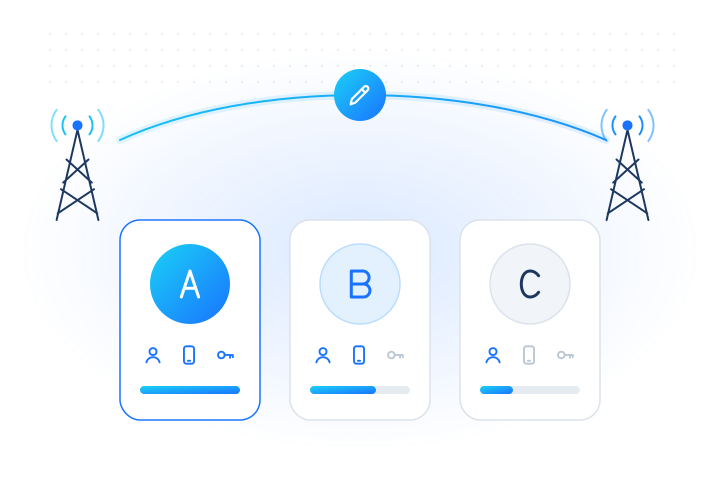
Yes, but it isn't a pass. STIR/SHAKEN is the caller-ID authentication framework that US voice providers had to implement in the IP parts of their networks by 30 June 2021 (FCC, 2026). The originating provider signs each call with an attestation level (ATIS-1000074.v003, 2022):
| Level | The signing provider… |
|---|---|
| A (full) | is responsible for the call, knows the customer, and "has established a verified association with the telephone number used for the call" |
| B (partial) | knows the customer but has not verified the number |
| C (gateway) | "has no relationship with the originator of the call (e.g., international gateways)" |
Ask your provider which level your calls get. B or C is common when you send calls through a platform that doesn't own your numbers, or display a number from another provider. Moving the numbers to the signing provider, or letting it verify your right to use them, usually gets you to A.
Attestation proves identity, not wantedness. The FCC has said that STIR/SHAKEN "does not distinguish legal calls from illegal ones", and that A-attested calls may still be blocked when reasonable analytics show they are unwanted (FCC 20-96, 2020, paras. 31 and 48). Our STIR/SHAKEN attestation levels guide explains the levels in more detail.
How do I check my own numbers' reputation?
Use three views, because none shows everything:
- Test calls. Call handsets on the major US carriers and look at what appears. It is manual and only shows today's label, but it is the ground truth.
- Provider and analytics portals. Your carrier or a branded-calling provider may report labels and complaint counts for your numbers.
- Report-based reputation. Our spam reputation check shows whether a number appears in spam and nuisance-call reports: telecom-regulator actions, government complaint data and community report sites. It returns a level (
high,medium,loworno_reports), a 0–100 score and the reasons.
Be clear about the limits of the third view. Its report data is densest for North American and European numbers, and it is in limited access: available to approved customers only for now, so the public sandbox key returns 403 service_disabled for it. It can't see what a carrier displays. It shows whether your number carries the kind of public report history that analytics engines also see. With access, a test-mode request and one documented fixture look like this:
curl https://api.mobilevalidate.com/v1/lookup \
  -H "Authorization: Bearer $MOBILEVALIDATE_API_KEY" \
  -H "Content-Type: application/json" \
-d '{"numbers": ["+447700900001"], "checks": ["spam"]}'{"service": "number.spam", "status": "completed", "registered": true,
"attributes": {"risk_level": "high", "risk_score": 95, "reason_regulator": true,
"reason_government": false, "reason_community": true, "reason_unassigned": false,
"voip_range": false, "top_category": "robocall", "first_seen": "2025-11",
"last_seen": "2026-08", "sources": 2}, "checked_at": "2026-09-25T10:15:01Z"}The test data is invented. On your own numbers, a high or medium level with reason_community means people have reported your calls: fix the pattern or the list before you dispute anything. no_reports means we hold no reports. It doesn't mean carriers won't label you. Check only numbers you own or call from.
How do I register numbers and dispute a label?
Register first, then dispute what's left:
- Free Caller Registry. Three US analytics providers, First Orion, Hiya and TNS, run freecallerregistry.com, where you can "register outbound business phone numbers for free" in one submission. The site warns that registration "does not guarantee redress based on analysis that each call protection provider does independently."
- Carrier and app forms. Carriers and call-blocking apps have their own dispute pages. Include your business name, the numbers, your call purpose, daily volume, and how people consented.
- CNAM. Ask your provider to set a caller name (CNAM) that matches your brand on every number. A missing or generic name looks worse than a clear one. See our CNAM glossary entry.
- Branded calling. Rich Call Data services such as CTIA's Branded Calling ID can show your name, logo and call reason on supported phones.
Your legal rights differ for blocking and labeling. If a terminating provider blocks your calls, it must offer "a single point of contact … for receiving call blocking error complaints", give a status update within 24 hours, and not charge for good-faith complaints (eCFR, 2026, 64.1200(k)(8)). Blocked calls return SIP code 603+ under (k)(9), so ask your provider for those codes. A separate right in (k)(10), a list of calls blocked in the last 28 days, belongs to the subscriber of the called number, not to the caller. For labeling, the FCC declined in 2020 to require redress, and instead encouraged providers "to work in good faith with callers to avoid erroneous labeling" (FCC 20-187, 2020, para. 79). A 2025 FCC proposal would require a verified caller name on calls shown as A-attested. It was still a proposal when we checked on 3 November 2026 (Federal Register, 2025).
What should a registration or dispute include?
The same facts every time, kept in one place so you can resubmit quickly when a new number goes live. Analytics providers and carriers ask for similar information:
| Field | Example |
|---|---|
| Legal business name and the brand people know | "Example Dental Group" (fictional) |
| Numbers, in E.164 | +15555550123 |
| Call purpose | Appointment reminders and patient call-backs |
| Daily and peak call volume per number | 300 a day, at most 40 an hour |
| How people consented | Booked online; reminder opt-in on the booking form |
| Caller name (CNAM) shown | EXAMPLE DENTAL |
| Attestation level from your provider | A |
| Contact for questions | A monitored mailbox, not a personal address |
Be consistent. A number registered for "appointment reminders" that then carries sales calls looks worse than one described accurately from the start.
What doesn't work?
Some common reactions to a label make things worse:
- Rotating to fresh numbers. New numbers have no history, the traffic pattern that caused the label is unchanged, and each new number is likely to be labeled in turn. It is also the behavior of the callers the labels exist to stop.
- Matching the called person's area code with numbers you don't really use for a local presence. The FCC lists "neighbor spoofing patterns" as an analytics signal (FCC 19-51, 2019).
- Raising the dial rate to make up for low answer rates. More short, unanswered calls are exactly what lowers the score.
- Disputing before fixing. A dispute on a number with an ongoing complaint pattern rarely sticks. Fix the list and the pattern first.
Is my voice provider part of the problem?
It can be. Providers must file in the FCC's Robocall Mitigation Database, and since 5 February 2026 they must keep those filings accurate and current. The order sets a base fine of $10,000 per false filing and $1,000 for not updating within 10 days (Federal Register, 2026). A provider that carries a lot of bad traffic can drag down the reputation of every customer's calls.
Ask your provider:
- What attestation level do my calls get, and why?
- Is your Robocall Mitigation Database filing current?
- Do you support branded calling or Rich Call Data?
- Can you show me blocked-call codes and complaint counts per number?
Our Robocall Mitigation Database census shows how filings look across the industry.
How often should I re-check?
Tie checks to change, and add a floor:
| When | What to check |
|---|---|
| Before a number goes live | Attestation level, CNAM, registry submission, reputation baseline |
| Before each campaign | List validity and line type; consent and do-not-call suppression |
| Weekly while a number carries campaigns | Test calls on major carriers; reputation level and reasons |
| After a volume change or complaint spike | All of the above, same day |
| Monthly for quiet numbers | Reputation level; registry entries still valid |
Clean lists matter more than most teams think. Calls to disconnected, invalid or landline numbers lower completion rates, which is one of the listed signals. Our carrier lookup returns line type and current carrier for each number. Invalid and duplicate inputs are free, and inconclusive results aren't charged. The call center use case shows where these checks fit. For the other side of the call, screening inbound numbers, see screening inbound calls with spam reputation.
What does the remediation checklist look like?
- Every outbound call goes to someone who consented or expects it. Do-not-call lists applied.
- Calls signed with A attestation. The provider confirms it.
- CNAM set on every number, matching the brand people know.
- Numbers registered at the Free Caller Registry, and disputes filed with carriers or apps that still label them.
- New numbers ramped up gradually. Calls per minute and retries per person capped.
- Separate numbers for support call-backs and outbound sales, used consistently. No rotation to escape labels.
- Lists validated before each campaign, removing invalid and disconnected numbers.
- Reputation and test calls reviewed weekly while numbers are active.
- Blocked-call codes (603+) monitored, and blocking disputes sent to each provider's point of contact.
What are the key takeaways?
- "Spam Likely" is a score from a carrier's analytics, built from patterns, complaints and caller-ID signals. It isn't a judgment of your business.
- A-level attestation helps but doesn't override analytics. Patterns and complaints still count.
- Register numbers for free with the three US analytics providers, set CNAM, and dispute the remaining labels per carrier or app.
- You have formal redress rights for blocking, not for labeling.
- Our spam reputation check is in limited access, with report coverage strongest in North America and Europe. It shows report history, not the handset label.
- Fix causes. Rotating numbers to escape labels is evasion, and we don't recommend it.
Platform and company names are used descriptively. MobileValidate is not affiliated with any carrier, analytics provider or industry body named here.
Sources
- Call Blocking Tools and Resources — Federal Communications Commission, 2026
- Combating Spoofed Robocalls with Caller ID Authentication — Federal Communications Commission, 2026
- Advanced Methods to Target and Eliminate Unlawful Robocalls, Declaratory Ruling (FCC 19-51) — Federal Communications Commission, 2019
- Advanced Methods to Target and Eliminate Unlawful Robocalls, Third Report and Order (FCC 20-96) — Federal Communications Commission, 2020
- Advanced Methods to Target and Eliminate Unlawful Robocalls, Fourth Report and Order (FCC 20-187) — Federal Communications Commission, 2020
- Signature-based Handling of Asserted information using toKENs (SHAKEN), ATIS-1000074.v003 — ATIS, 2022
- 47 CFR 64.1200 Delivery restrictions (paragraph (k)) — eCFR, US Government Publishing Office, 2026
- Improving the Effectiveness of the Robocall Mitigation Database (FCC 24-135, 91 FR 343) — Federal Register, 2026
- Advanced Methods To Target and Eliminate Robocalls (FNPRM FCC 25-76, 90 FR 56101) — Federal Register, 2025
- Free Caller Registry — First Orion, Hiya and TNS, 2026
- Branded Calling ID — CTIA, 2026
Frequently asked questions
Why does my business number show as Spam Likely?
Because the analytics engine behind the called person's carrier or app scored your calls as likely unwanted. Engines look at calling patterns (bursts, short calls, low answer rates), complaints and caller-ID signals, not at your intent. A new number with a sudden high volume is a common trigger.
Does A-level STIR/SHAKEN attestation remove the label?
Not on its own. Attestation says your provider knows you and that you may use the number. The FCC has noted that STIR/SHAKEN does not distinguish legal calls from illegal ones, and that A-attested calls can still be blocked when analytics show they are unwanted. It helps, but patterns and complaints still count.
Is there a single place to remove a Spam Likely label?
No. Each carrier works with its own analytics provider. The free caller registry run by three US analytics providers lets you register numbers at once, but it doesn't guarantee a label will change. Carriers and apps also have their own dispute forms.
Can MobileValidate show the label my number gets on a handset?
No. No public service can see what each carrier displays. Our spam reputation check shows whether a number appears in spam and nuisance-call reports, with a level, score and reasons. It is in limited access.
Should I rotate numbers to avoid labels?
No. Rotating numbers to get around labels is evasion, not remediation, and it can make every number look suspicious. Fix the cause: consent, patterns, attestation and registration. The FCC's own guidance to businesses is about limiting call rates and call-backs, and using distinct numbers for distinct purposes.
Related services and guides
More from the blog
All articlesFraud prevention
STIR/SHAKEN attestation levels A, B and C, explained
What STIR/SHAKEN attestation levels A, B and C mean, what they don't prove, how they relate to spam labels, and the rules in the US, Canada and France.
8 min read
Fraud prevention
Screening inbound calls with spam reputation
A call-center workflow for routing inbound calls by spam reputation: levels, reasons, STIR/SHAKEN, limits of the data, and why no_reports isn't safe.
8 min read
Research
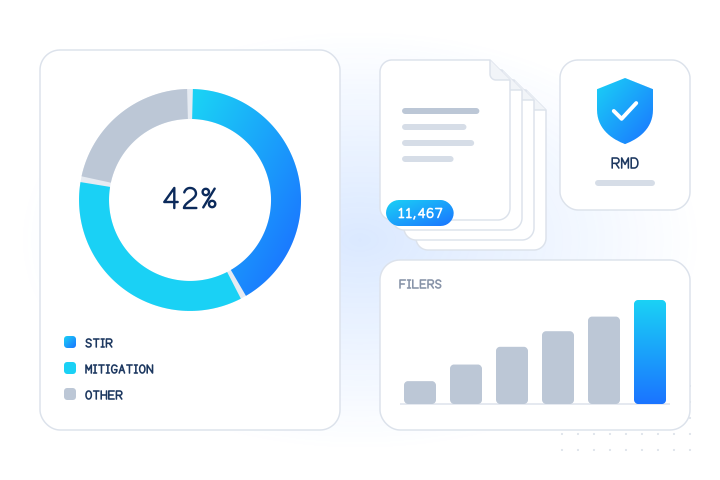
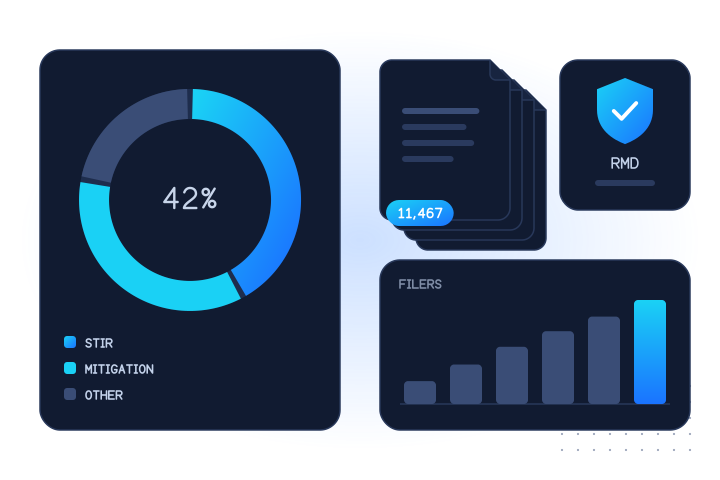
Robocall Mitigation Database: a 2026 census of 11,467 filings
We counted all 11,467 published FCC Robocall Mitigation Database filings: 42% certify full STIR/SHAKEN, 36% rely on mitigation only. Data and method.
8 min read