On this page
Phone number reputation is a summary of a number's history: how often people complained about it, whether regulators acted against it, whether it was reported on spam-report sites and how it behaves on the network, usually reduced to a risk level or score. Carriers use it to label or block calls, and businesses use it to screen inbound calls, leads and sign-ups. It describes the number, not the person, and "no reports" never means "safe".
What is phone number reputation?
Phone number reputation is the trust a number has earned from its past behaviour and reports. Like a sender's reputation in e-mail, it is built by observers, not declared by the owner, and different observers reach different conclusions.
Two questions drive almost every use of it:
- Inbound: "Should I trust this number that is calling me or signing up?" Call centres, fraud teams and lead buyers ask this.
- Outbound: "Why are people's phones labelling my number as spam?" Sales teams, clinics and anyone who calls customers ask this.
This guide explains how reputation is built, which signals it uses and where it fails. For an inbound routing workflow, see screening inbound calls with spam reputation.
Who scores a phone number's reputation?
There is no single global score. Several systems score numbers independently:
| Who | What they score | What they do with it |
|---|---|---|
| Terminating carriers and their analytics partners | Calls arriving on their network, in real time | Show labels such as "Spam Likely", send to voicemail, or block |
| Call-blocking and caller-ID apps | Numbers reported by their users | Warn or block on the user's phone |
| Regulators | Complaints filed by the public | Enforcement; some publish complaint data |
| Messaging providers and operators | Sender numbers and content | Filter or throttle business messages |
| Number-intelligence services | Aggregated reports and public data | Return a level or score to businesses through an API |
Because each system sees different data, a number can be clean in one and flagged in another. That is why a business that has fixed a problem with one carrier may still see labels on another.
Which signals feed a reputation score?
US regulators have described the kind of analytics carriers may use. In 2019 the FCC clarified that voice providers may offer opt-out call blocking "based on any reasonable analytics designed to identify unwanted calls", and listed factors such as "large bursts of calls in a short timeframe; low average call duration; low call completion ratios; invalid numbers placing a large volume of calls; common Caller ID Name (CNAM) values across voice service providers; a large volume of complaints related to a suspect line; sequential dialing patterns; neighbor spoofing patterns" and "correlation of network data with data from regulators, consumers, and other carriers" (FCC 19-51).
Grouped by type, the signals look like this:
| Signal class | Examples | Who can see it |
|---|---|---|
| Network behaviour | Call bursts, short durations, low answer rates, sequential dialling | Carriers, in real time |
| Complaints | Reports to regulators and consumer agencies | Regulators; partly public |
| Community reports | Reports on spam-report sites and in apps | App operators, data services |
| Enforcement | Regulator actions naming a number | Public |
| Number status | Unassigned or recently offered numbers placing calls | Carriers, some data services |
| Caller ID authentication | STIR/SHAKEN attestation level | Carriers |
| Line type | VoIP or other ranges that are cheap to rotate | Anyone with carrier data; a weak hint only |
Messaging has its own version. CTIA's guidelines describe operators reporting, blocking and suspending unwanted message traffic, so a sender number's history affects whether its texts arrive (CTIA, 2023).
Is STIR/SHAKEN the same as reputation?
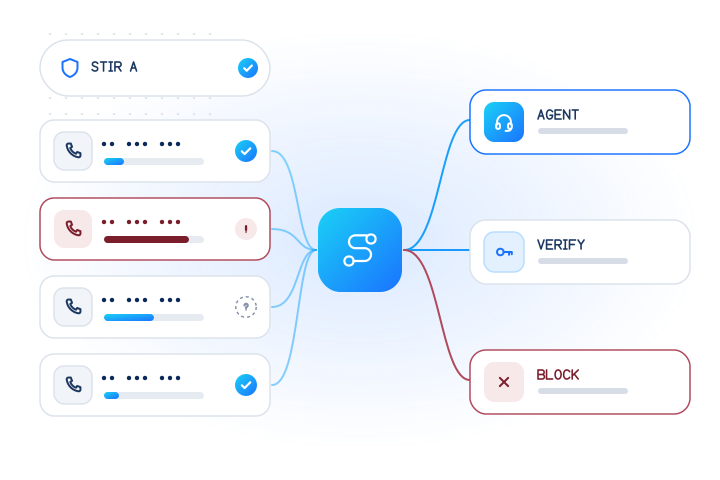
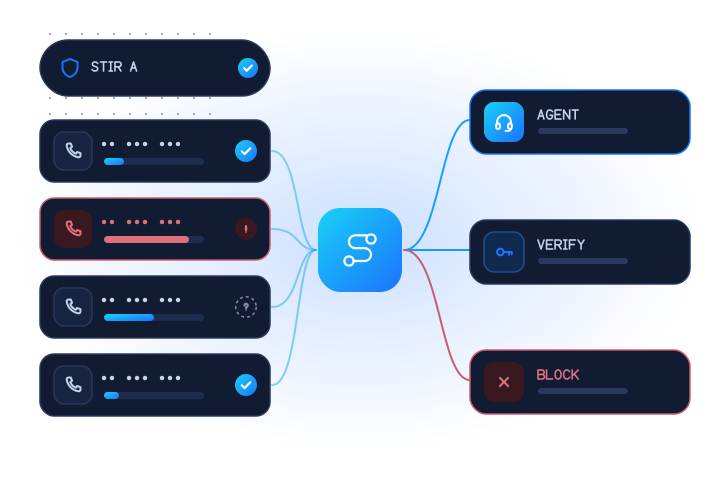
No, and mixing them up leads to wrong conclusions. STIR/SHAKEN is caller ID authentication: the originating provider signs the call and states how well it knows the caller's right to use the number. An A-attested call means the provider vouches for the caller ID. It doesn't mean the call is wanted. A legitimate business can be spoofed, and an authenticated caller can still run a nuisance campaign.
Reputation systems use attestation as one input. In the same 2019 ruling, the FCC proposed a safe harbor for blocking unauthenticated calls, a step it said would encourage deployment of the SHAKEN/STIR framework (FCC 19-51).
What can't a reputation score tell you?
Every score has blind spots, and good decisions account for them:
- Spoofing. A fraudster can display someone else's number. The reports then land on the innocent owner, and the fraudster's real line stays clean.
- New and rarely used numbers. They have no history. "No reports" is the normal state for most numbers.
- Reassigned numbers. A number with a bad history may now belong to someone new. See the Reassigned Numbers Database, explained.
- Coverage. Complaint data and community reporting are densest in North America and Europe. Elsewhere, the absence of reports is weaker evidence.
- Context. A debt collector, a pharmacy reminder line and a scam can all generate complaints. The category of reports matters as much as their count.
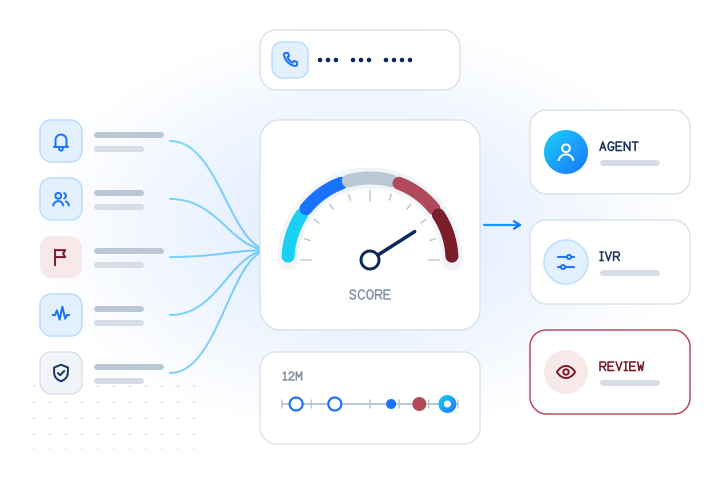
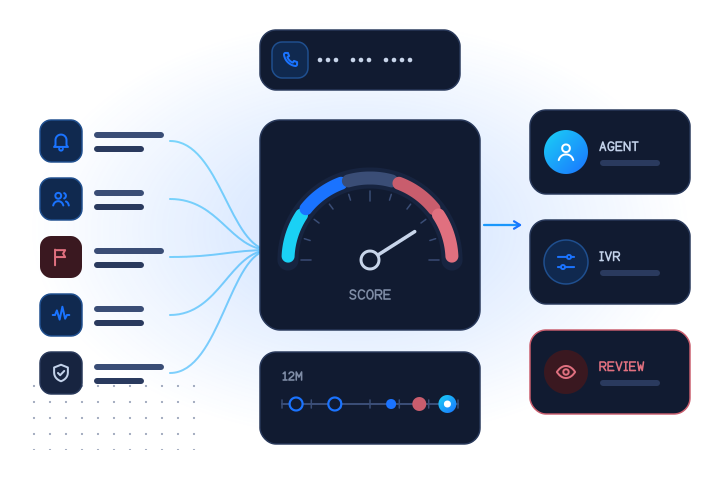
That's why reputation should route decisions (to an agent, an IVR, a verification step, a review queue) rather than make final verdicts about people.
How does MobileValidate score spam reputation?
The spam reputation check is in limited access: approved customers only for now. It returns a level, a score and the reasons behind it, from daily-refreshed reference data:
| Field | Meaning |
|---|---|
risk_level | high, medium, low or no_reports |
risk_score | 0–100; more and stronger reports raise it |
reason_regulator / reason_government / reason_community | A regulator acted, the number appears in government complaint data, or it was reported on community sites |
reason_unassigned | The number was recently offered as unassigned, a sign of spoofing or a made-up lead |
voip_range | Hint only: the range belongs to a VoIP carrier. Adds no points |
top_category | Most frequent report type, such as robocall, impersonation or debt_relief |
first_seen / last_seen | First and last month the number appeared in our data |
sources | Number of independent signal classes behind the answer |
Levels follow published rules. high needs a score of 80 or more and either a regulator action or at least two independent signal classes, so one noisy source can't make a number "high" on its own. medium is 50–79 and low is 20–49. Reports last seen more than 12 months ago count half, so old problems fade. Report texts, reporter details and names are never returned.
Every conclusive answer is billed, including no_reports, at $0.002 per number in real time and $0.001 in bulk at the time of writing (pricing). unknown answers and numbers from sanctioned countries and regions are free. Repeat checks within 24 hours come from your account's cache at no charge.
How do you use reputation in a call or sign-up flow?
Here is a real-time check with a test key, where +447700900001 returns high and +447700900002 returns no_reports (see test mode):
curl https://api.mobilevalidate.com/v1/lookup \
  -H "Authorization: Bearer $MOBILEVALIDATE_API_KEY" \
  -H "Content-Type: application/json" \
  -d '{"numbers": ["+447700900001", "+447700900002"], "checks": ["spam", "carrier"], "wait": 3}'
And a routing rule that treats reputation as one signal, not a verdict:
function route(item) {
  const spam = item.checks["number.spam"];
  if (spam?.status !== "completed") return "normal";            // unknown or late: don't punish the caller
  const a = spam.attributes;
  if (a.risk_level === "high" && ["impersonation", "fraud_hacking"].includes(a.top_category)) return "verify_identity";
  if (a.risk_level === "high") return "ivr_first";
  if (a.reason_unassigned) return "review";                     // likely spoofed caller ID or invented lead
  if (a.risk_level === "medium") return "flag_for_agent";
  return "normal";                                              // low or no_reports: handle as usual
}
The same idea works elsewhere:
- Call centres: route
highcallers to an IVR or a verification step instead of blocking. See call-center screening. - Lead verification: a lead whose number was recently offered as unassigned is probably invented. See lead verification.
- Sign-ups: add
risk_levelto your fraud score next to line type from the carrier lookup and device signals. Our guide to reducing fake sign-ups shows how the signals combine. - Your own numbers: check the numbers you call from on a schedule, so you see complaints before customers stop answering.
How do you use reputation data fairly?
Reputation is information about a number that usually belongs to a person. Use it to protect your customers and staff, not to judge people. Don't use it for credit, employment, housing or insurance decisions; our acceptable use policy forbids that. Explain any extra step neutrally. Store checked_at with each decision, because scores change. If your own number appears in our data and you think it shouldn't, use the opt-out form; the data-subject notice explains your rights.
Key takeaways
- Phone number reputation summarises a number's history: complaints, community reports, regulator actions and network behaviour.
- Carriers, apps, regulators and data services score numbers separately, so reputations differ between systems.
- US rules let carriers block calls using "reasonable analytics" such as call bursts, short durations, low completion ratios and complaint volumes.
- STIR/SHAKEN authenticates caller ID; it is an input to reputation, not a reputation score.
- "No reports" is not "safe": spoofing, new numbers, reassignment and thin coverage all hide risk.
- Use reputation to route calls, leads and sign-ups to the right next step. MobileValidate's spam reputation check (limited access) returns levels, scores and reasons, and never charges for unknown answers.
Sources
- Advanced Methods to Target and Eliminate Unlawful Robocalls, Declaratory Ruling and Third FNPRM (FCC 19-51, adopted 6 June 2019), paragraphs 34–35 — Federal Communications Commission, 2019
- Messaging Principles and Best Practices (May 2023) — CTIA, 2023
Frequently asked questions
What is phone number reputation?
It is a summary of how a phone number has behaved and been reported: complaints to regulators, reports by people, regulator actions and calling patterns, usually expressed as a risk level or score. It describes the number's history, not the identity or intent of whoever uses it now.
Who scores phone number reputation?
Several parties, separately. Carriers and their analytics partners score calls to decide on labels such as Spam Likely or on blocking. Call-blocking apps keep their own lists. Data services, including MobileValidate's spam reputation check, aggregate public complaint data and reports for businesses.
Is STIR/SHAKEN the same as number reputation?
No. STIR/SHAKEN authenticates whether the calling provider vouches for the caller ID; it says nothing about whether the calls are wanted. A fully attested call can still be spam, and reputation systems use attestation as one input among many.
Does a clean reputation mean a number is safe?
No. No reports means no negative signals, nothing more. New numbers, rarely used numbers and spoofed caller IDs often have no history, so combine reputation with other checks.
Why does my business number have a bad reputation?
Usually because of calling patterns (high volume, short calls, low answer rates), complaints from people who didn't expect the call, or because someone spoofed your number. Registering your numbers with analytics providers, fixing the calling pattern and disputing wrong labels are the usual fixes.
Can a phone number's reputation improve?
Yes. Most systems weigh recent activity more than old reports. In MobileValidate's scoring, reports last seen more than 12 months ago count half, so a number that has been quiet slowly drifts down.
Can I check the reputation of any number with MobileValidate?
The spam reputation check is in limited access for approved customers. It covers numbers from all countries except sanctioned ones and is meant for numbers you have a lawful reason to process, such as inbound callers, leads and sign-ups.
Related services and guides
More from the blog
All articlesFraud prevention
Screening inbound calls with spam reputation
A call-center workflow for routing inbound calls by spam reputation: levels, reasons, STIR/SHAKEN, limits of the data, and why no_reports isn't safe.
8 min read
Research
US nuisance-call complaints in 2026: what the public data shows
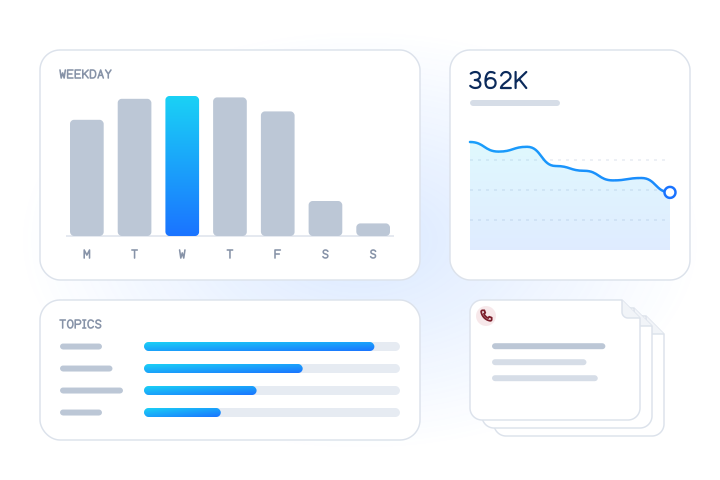
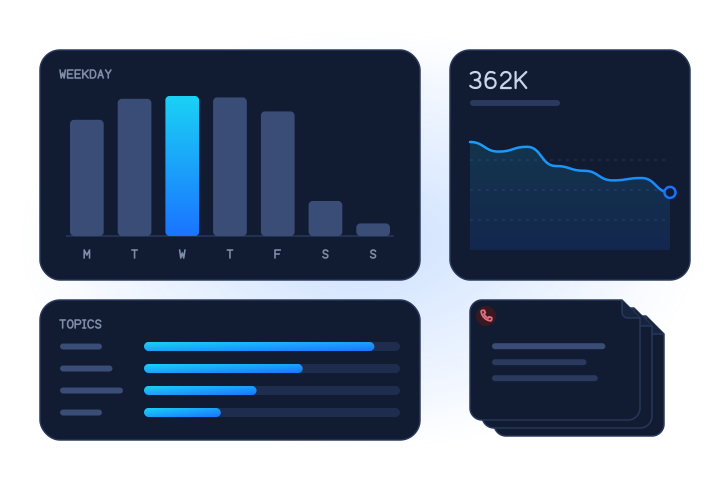
Our analysis of 362,116 FTC Do Not Call complaints and FCC unwanted-call data: top subjects, robocall share, weekday pattern and trend.
8 min read
Fraud prevention
How to reduce fake sign-ups with layered phone and e-mail checks
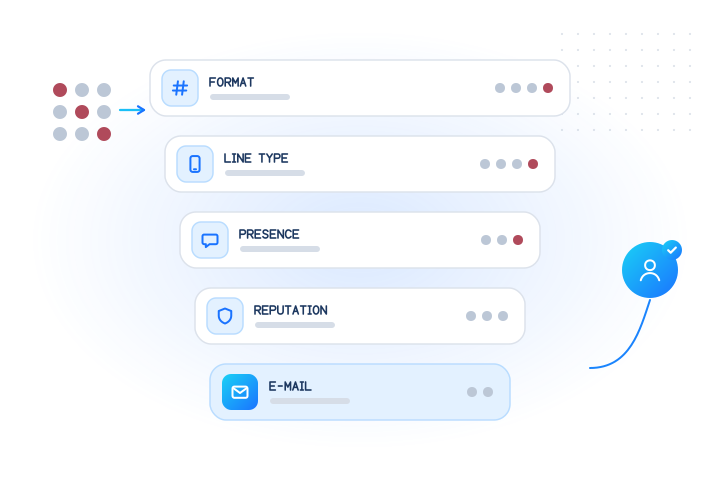
A layered sign-up defence: format, line type, messaging presence, spam reputation and e-mail checks, mapped to friction tiers you can measure.
8 min read