On this page
Mexican numbers use the country code +52. Every number, mobile or landline, has 10 digits after the code and is dialled the same way everywhere in the country; in E.164 a number looks like +52 XX XXXX XXXX. Because mobile and fixed numbers share the same area codes and mobiles have been portable for years, the number tells you neither the line type nor the network, and since 2026 every mobile line must be registered to its holder or be suspended.
This guide is part of our phone numbers by country series. The tables are generated from libphonenumber's metadata, our MNP atlas and our public catalog. Example numbers are masked with X. The regulator's site (gob.mx) and the federal gazette blocked automated requests from our server, so we read those pages through Internet Archive copies on 2026-09-27. The links in the sources point to those copies. This is a summary, not legal advice.
What does a Mexican phone number look like?
A Mexican number is a 2- or 3-digit area code plus the local number, 10 digits in all: 55 XXXX XXXX in Mexico City, 22X XXX XXXX in a 3-digit area. There is no trunk prefix. You dial the same 10 digits from a landline or a mobile, in the same city or another, and from abroad you put +52 in front.
| Item | Value |
|---|---|
| Country calling code | +52 |
| International call prefix (dialling out) | 00 |
| Trunk prefix (dialling at home) | none |
| Mobile: digits after +52 | 10 |
| Fixed line: digits after +52 | 10 |
| Toll-free: digits after +52 | 10 |
| Premium rate: digits after +52 | 10 |
| Shared cost: digits after +52 | 10 |
| Personal number: digits after +52 | 10 |
| Mobile, national format (masked) | 22X XXX XXXX |
| Mobile, international (masked) | +52 22X XXX XXXX |
| Mobile, E.164 (masked) | +5222XXXXXXXX |
| Fixed line, national format (masked) | 20X XXX XXXX |
| Fixed line, international (masked) | +52 20X XXX XXXX |
| Fixed line, E.164 (masked) | +5220XXXXXXXX |
Why "+52 1" still shows up
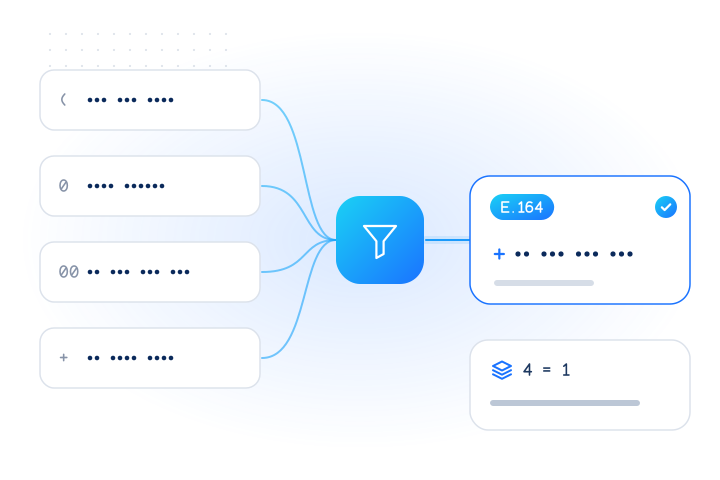
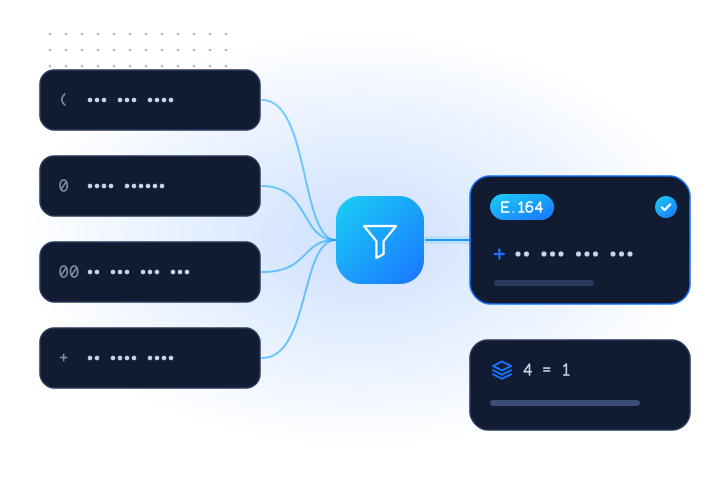
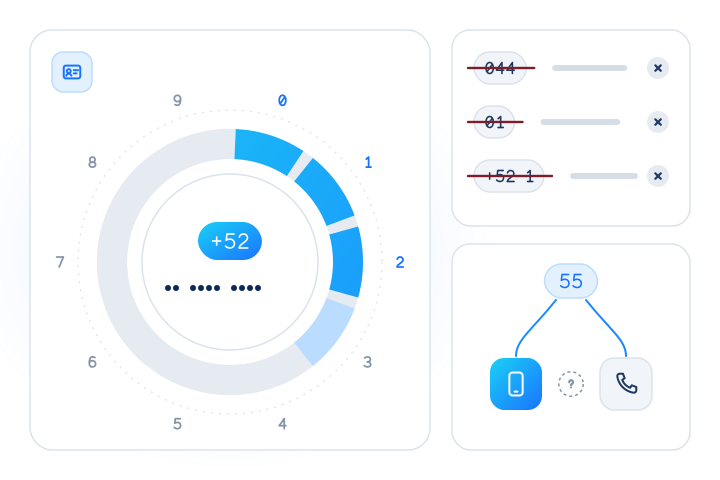
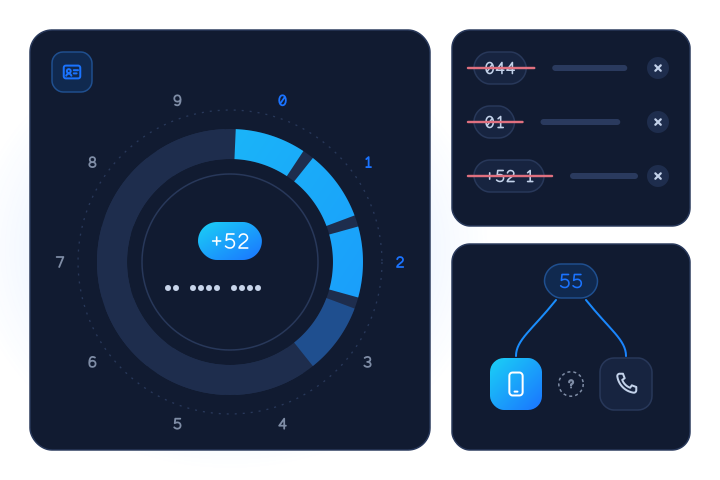
Until August 2019, callers used 044 or 045 before a mobile number at home, 01 for long distance, and +52 1 to reach a Mexican mobile from abroad. The Federal Telecommunications Institute (IFT) replaced all of that with uniform 10-digit dialling on 3 August 2019. Its announcement says the 044, 045 and 01 prefixes were removed and every number is unique at 10 digits. The plan as filed with the ITU (communication of 5 July 2024) also drops the 1 for international calls to mobiles. libphonenumber followed in v8.10.17 (15 August 2019): the release notes say the domestic tokens (01 and 044) and the international mobile token (1) "are abolished now".
Old CRM records, spreadsheets and some app exports still carry +52 1 55 … or 044 55 …. We checked the current libraries on 2026-09-27: both libphonenumber-js 1.13.13 and Python phonenumbers 9.0.40 mark +52 1 followed by 10 digits as invalid. So strip the old token before you validate, as the code below does. Store only the 12-character E.164 form (+52 plus 10 digits).
Which prefixes are mobile numbers?
None exclusively. In Mexico a mobile line and a landline in the same city share the same area code, so the first digits can't separate them. libphonenumber's mobile pattern for MX covers almost the same ranges as its fixed-line pattern. That is why it returns FIXED_LINE_OR_MOBILE for most Mexican numbers, including its own mobile example.
The table below counts every 10-digit number in libphonenumber's mobile pattern for MX. Read it as "where a mobile number can exist", not "where numbers are mobile":
| National prefix | International | Share of the block that is mobile (10-digit numbers) | 3-digit sub-blocks that aren't fully mobile |
|---|---|---|---|
AA, for 11 blocks AA = 22, 33, 44, 45, 55, 56, 72, 77, 81, 96, 99 | +52 AA | 100% | — |
23 | +52 23 | 70.0% | not mobile: 230, 234, 239 |
AA, for 2 blocks AA = 24, 75 | +52 AA | 80.0% | not mobile: AA0, AA2 |
27 | +52 27 | 80.0% | not mobile: 270, 277 |
28 | +52 28 | 70.0% | not mobile: 280, 286, 289 |
29 | +52 29 | 30.0% | not mobile: 290–293, 295, 298, 299 |
AA, for 2 blocks AA = 31, 59 | +52 AA | 80.0% | not mobile: AA0, AA8 |
AA, for 14 blocks AA = 32, 34, 35, 38, 42, 46, 47, 62–64, 71, 73, 74, 76 | +52 AA | 90.0% | not mobile: AA0 |
AA, for 3 blocks AA = 37, 43, 98 | +52 AA | 80.0% | not mobile: AA0, AA9 |
39 | +52 39 | 50.0% | not mobile: 390, 396–399 |
41 | +52 41 | 80.0% | not mobile: 410, 416 |
48 | +52 48 | 80.0% | not mobile: 480, 484 |
49 | +52 49 | 70.0% | not mobile: 490, 491, 497 |
58 | +52 58 | 10.0% | not mobile: 580–587, 589 |
61 | +52 61 | 60.0% | not mobile: 610, 611, 617, 619 |
65 | +52 65 | 70.0% | not mobile: 650, 654, 655 |
66 | +52 66 | 90.0% | not mobile: 666 |
67 | +52 67 | 70.0% | not mobile: 670, 678, 679 |
68 | +52 68 | 20.0% | not mobile: 680–685, 688, 689 |
69 | +52 69 | 50.0% | not mobile: 690–693, 699 |
78 | +52 78 | 70.0% | not mobile: 780, 787, 788 |
79 | +52 79 | 20.0% | not mobile: 790, 792–796, 798, 799 |
82 | +52 82 | 70.0% | not mobile: 820, 822, 827 |
83 | +52 83 | 60.0% | not mobile: 830, 837–839 |
84 | +52 84 | 50.0% | not mobile: 840, 843, 847–849 |
86 | +52 86 | 70.0% | not mobile: 860, 863, 865 |
87 | +52 87 | 60.0% | not mobile: 874–876, 879 |
89 | +52 89 | 50.0% | not mobile: 890, 893, 895, 896, 898 |
91 | +52 91 | 60.0% | not mobile: 910–912, 915 |
92 | +52 92 | 40.0% | not mobile: 920, 925–929 |
93 | +52 93 | 60.0% | not mobile: 930, 931, 935, 939 |
95 | +52 95 | 40.0% | not mobile: 950, 952, 955–957, 959 |
97 | +52 97 | 20.0% | not mobile: 970, 973–979 |
The area codes that PROFECO's REPEP price list names, 55 (Mexico City), 33 (Guadalajara) and 81 (Monterrey), are fully open to both kinds of line. The blocks marked "not mobile" are ranges the metadata doesn't use at all, not landline-only ranges. The ITU's copy of Mexico's plan describes the same 10-digit structure. If you need to know whether a number is a mobile, for example before you send an SMS, you have to look it up.
How do I validate a Mexican number in code?
Use a libphonenumber port with the default region MX, strip the pre-2019 tokens first, and accept both MOBILE and FIXED_LINE_OR_MOBILE.
JavaScript (npm install libphonenumber-js):
import { parsePhoneNumberFromString } from "libphonenumber-js/max";

/** "55 …", "+52 55 …", old "+52 1 55 …" / "044 55 …" / "01 55 …" → E.164 for a Mexican number that can be a mobile, or null. */
export function normalizeMexico(raw) {
  const s = String(raw).replace(/[\s().-]/g, "").replace(/^00/, "+")
    .replace(/^\+521(\d{10})$/, "+52$1")        // mobile token "1", abolished in 2019
    .replace(/^(?:044|045|01)(\d{10})$/, "$1");  // old domestic prefixes, abolished in 2019
  const phone = parsePhoneNumberFromString(s, "MX");
  if (!phone?.isValid() || phone.country !== "MX") return null;
  const type = phone.getType();
  return type === "MOBILE" || type === "FIXED_LINE_OR_MOBILE" ? phone.number : null;
}
Python (pip install phonenumbers):
import re

import phonenumbers
from phonenumbers import NumberParseException, PhoneNumberFormat, PhoneNumberType


def normalize_mexico(raw: str) -> str | None:
    """E.164 for a Mexican number that can be a mobile, or None. Accepts the pre-2019 forms too."""
    s = re.sub(r"[\s().-]", "", raw)
    s = re.sub(r"^00", "+", s)
    s = re.sub(r"^\+521(\d{10})$", r"+52\1", s)      # mobile token "1", abolished in 2019
    s = re.sub(r"^(?:044|045|01)(\d{10})$", r"\1", s)  # old domestic prefixes, abolished in 2019
    try:
        n = phonenumbers.parse(s, "MX")
    except NumberParseException:
        return None
    if not phonenumbers.is_valid_number(n) or phonenumbers.region_code_for_number(n) != "MX":
        return None
    if phonenumbers.number_type(n) not in (PhoneNumberType.MOBILE, PhoneNumberType.FIXED_LINE_OR_MOBILE):
        return None
    return phonenumbers.format_number(n, PhoneNumberFormat.E164)
We ran both on 2026-09-27 (libphonenumber-js 1.13.13 with metadata 9.0.39, Python phonenumbers 9.0.40). Both returned an E.164 number for rows 1 to 5 below and nothing for the rest. They also turned +52 1 55 …, 044 55 … and 01 55 … into the same +5255… number. Since no area code starts with 1, an 11-digit number after +52 that starts with 1 can only be the old token. The shape regex column tests ^(?:\+52|0052)?[2-9]\d{9}$, the pattern most tutorials give:
| # | Case | Input (masked) | Shape regex ^(?:\+52|0052)?[2-9]\d{9}$ | libphonenumber (MX) |
|---|---|---|---|---|
| 1 | National (no trunk prefix) | 22X XXX XXXX | passes | valid, FIXED_LINE_OR_MOBILE |
| 2 | International, with spaces | +52 22X XXX XXXX | passes | valid, FIXED_LINE_OR_MOBILE |
| 3 | International dialling prefix 00 | 0052 22X XXX XXXX | passes | valid, FIXED_LINE_OR_MOBILE |
| 4 | E.164 | +5222XXXXXXXX | passes | valid, FIXED_LINE_OR_MOBILE |
| 5 | Dashes and brackets | (22X) XXX-XXXX | passes | valid, FIXED_LINE_OR_MOBILE |
| 6 | One digit short | 22XXXXXXX | fails | invalid |
| 7 | One digit too many | 22XXXXXXXXX | fails | invalid |
| 8 | Mobile shape, unused block 20 | 20XXXXXXXX | passes | invalid |
| 9 | Fixed line | 20X XXX XXXX | passes | valid, FIXED_LINE |
| 10 | Personal number range | 50X XXX XXXX | passes | valid, PERSONAL_NUMBER |
The regex accepts rows 8 to 10: an unused block, a landline-only range and a personal-number range. The library rejects all three for a mobile use case. Row 9 is the one landline range the metadata can tell apart (200 and 201); everywhere else the answer is FIXED_LINE_OR_MOBILE, and the code above lets it through. More languages are in our JavaScript and Python guides.
Does number portability change the carrier?
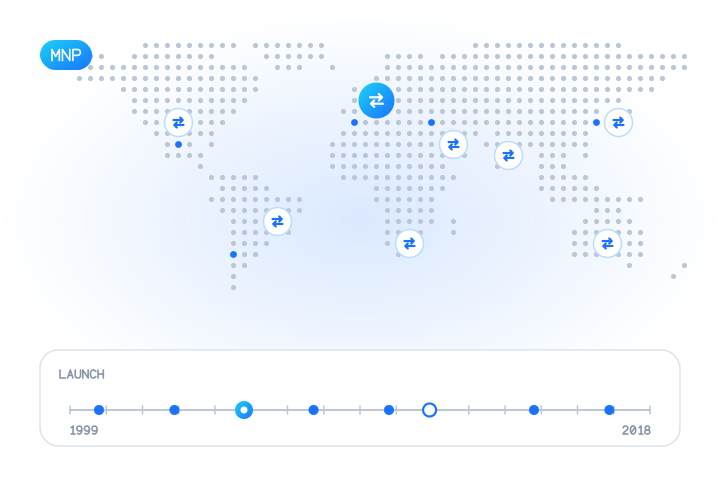
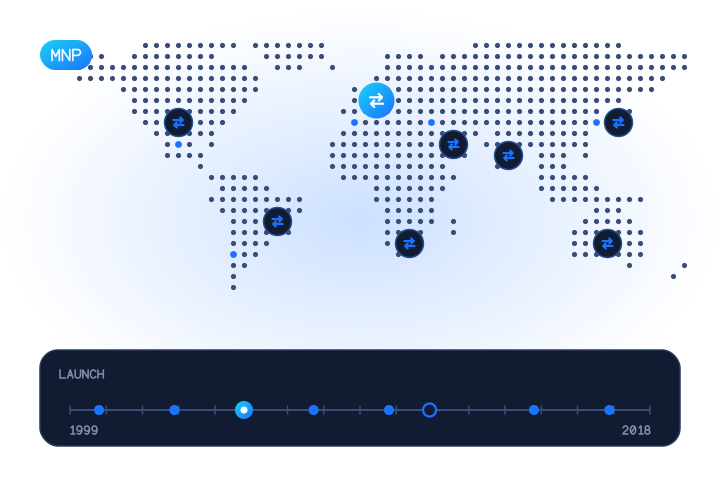
Yes. Portability is a user right in Mexico: the 2025 telecom law lists free porting "within the period the Commission sets" among users' rights (article 185), and the IFT's portability page describes it as free and done in 24 hours. The Mexico row of our MNP atlas:
| Item | Value |
|---|---|
| Mobile number portability | Yes |
| Mobile porting since | not verified |
| Maximum porting time | 24 hours |
| Governing rule | IFT Reglas de Portabilidad Numérica |
| Published porting volume | none published |
| Source | ift.org.mx |
| Checked | 2026-09-25 |
We haven't verified a launch date or a published porting volume, so the atlas leaves them blank rather than guess. The practical point is the same as elsewhere: neither the area code nor an old carrier table tells you the network a number is on today. If you route, price or score by network, look it up per number. Our MNP atlas compares Mexico with 67 other countries.
Which messaging apps and channels reach people?
SMS reaches every active Mexican mobile. For WhatsApp, Meta prices Mexico as its own market. Its pricing page lists lower marketing rates for Mexico from 1 October 2025 and an increase that took effect on 1 October 2026 (Meta pricing, read on 2026-11-03; no further Mexico change was announced then). We found no regulator statistics on messaging-app use, so we don't quote shares. Our WhatsApp OTP vs SMS OTP post shows how to compare the cost per verified user, and choosing a messaging channel by country covers the routing logic.
In 2026 one more factor matters: the line registry described below. A prepaid line that missed its deadline is suspended until its holder registers it. The CRT said in May 2026 that suspended lines can't make or receive calls or SMS and have no mobile data for any app, including messaging apps (CRT, Bol. 015/2026). Its August release says they can still call emergency and citizen-service numbers and their own operator, and receive earthquake alerts. So an OTP to a suspended line fails, over SMS and over an app. A failed OTP to a Mexican number in the second half of 2026 isn't necessarily a fake number.
What are the rules for SMS, sender IDs and OTP?
These summarise the sources listed at the end, as read on 2026-09-27. Not legal advice; ask counsel how they apply to you.
A new regulator: from IFT to CRT
The Ley en Materia de Telecomunicaciones y Radiodifusión, published in the federal gazette (DOF) on 16 July 2025, replaced the 2014 telecom law. It created the Comisión Reguladora de Telecomunicaciones (CRT), a deconcentrated body of the Agency for Digital Transformation and Telecommunications with technical independence (article 7). Under its transitional articles, the IFT was extinguished the day after the CRT's board was formed, and references to the IFT in other rules now mean the CRT. The IFT's website now says it is a historical archive and sends users to gob.mx/crt. Acts the IFT issued keep their full legal effect (eighteenth transitional article), so its numbering plan and portability rules still apply.
The mobile line registry (2026)
- The law. Article 103 says mobile operators may only activate and keep active lines linked to an end user who presented official ID. For people, the ID must carry the CURP (the national population register code); companies use their RFC (tax ID). Foreigners can identify with their name, country of origin and passport number. Emergency and citizen-service calls are exempt.
- The rules. The CRT approved its guidelines for identifying mobile lines on 8 December 2025. From 9 January 2026 every mobile line must be linked to a person or company, with a voter card or passport plus CURP (CRT, Bol. 008/2025). The data stays with the operators, as it already did for postpaid contracts.
- The deadlines. The CRT first set 30 June 2026 for lines that existed before 9 January (CRT, Bol. 015/2026). On 25 June 2026 it replaced that with a calendar by the number's last digit (CRT, Bol. 021/2026): 0 on 15 August, 1 on 31 August, 2 on 15 September, 3 on 30 September, 4 on 15 October, 5 on 31 October, 6 on 15 November, 7 on 30 November, 8 on 15 December and 9 on 31 December 2026. Lines not linked are suspended within the following 72 hours and restored once linked.
- Progress. By 19 August 2026, 73.2 million lines were linked, 60.5% of those expected (CRT, Bol. 030/2026). By 18 October 2026 the total was 96.3 million, 80.3% of those expected, and the CRT confirmed the remaining deadlines (5 on 31 October, then 6 to 9 as above). It still expects about 25 million unused lines to be purged, such as SIMs never activated or used once by visitors. A suspended line keeps its number and is restored as soon as it is linked (CRT, Bol. 049/2026).
For senders, this means two things. Numbers in your lists can go silent (suspended) and come back (linked) during 2026, depending on their last digit. And the purge of unused lines will return numbers to the pool, which is how number recycling starts. Re-check old numbers before you rely on them.
Marketing texts and the REPEP
Mexico's opt-out register is the REPEP (Registro Público para Evitar Publicidad), run by the consumer protection agency PROFECO. Consumers register fixed or mobile numbers for free, and the entry takes effect 30 calendar days later (PROFECO FAQ). Businesses that call or text for marketing buy access to the register by state and period (six months or a year). A business that calls or texts a registered number can be reported and fined up to MXN 1,798,305.81 (the amount on PROFECO's page in January 2026; the fine caps are updated every year), unless the consumer consented (PROFECO, general information). Political organisations, charities, pollsters, debt collectors and callers who offer no goods or services are outside it.
So before any promotional SMS: check your consent records, then check the REPEP list for the states you send to. We found no primary source for a national SMS sender-ID registration scheme in Mexico. Ask your SMS provider which sender formats its Mexican routes support.
What that means for OTP
A one-time passcode a user requested is not advertising, so the REPEP doesn't apply to it. Keep OTPs free of offers. Expect some failures from suspended prepaid lines until the end of 2026, and give users a way to retry once their line is active.
What changed recently?
The rows for MX and +52 in our numbering-plan changes dataset, built from libphonenumber's release notes:
| Change named in the release notes (2019-01-08 to 2026-09-23) | Releases |
|---|---|
| Numbering-plan metadata (validation, lengths, types) | 15 |
| Geocoding (area names) | 12 |
| Alternate formatting | 1 |
| All | 28 |
Latest numbering-plan updates for MX: 2025-04-09 (v9.0.3), 2024-09-04 (v8.13.45), 2024-06-27 (v8.13.40), 2024-05-29 (v8.13.38), 2024-04-02 (v8.13.34).
Mexico's metadata changes often, mostly as the regulator opens new blocks inside area codes. The August 2019 release carried the dialling reform. On the rules side, 2025 and 2026 brought the most change in a decade: the new telecom law and regulator in July 2025, and the line registry from January 2026 with deadlines running to 31 December 2026.
What can MobileValidate check for Mexican numbers?
Generated from our public catalog:
Catalog data as of 2026-11-03.
| Check | Accepts Mexico numbers | Notes |
|---|---|---|
| Format and country (every lookup) | Yes | Each number is parsed first; an invalid number returns invalid_number and is never billed. |
| Carrier lookup (beta) | Yes | Line type and current network where data exists; no data means unknown, not billed. Real time and bulk. |
| US/CA carrier lookup (premium) | No (US, CA only) | Answers unsupported_country for other countries, not billed. |
| Live network status (HLR) | Yes | Live reachability, porting, roaming (true or false) and current network; unknown is free. Real time and bulk. |
| Number portability (MNP) | Yes | Ported or not ported, and the current network code; unknown is free. Real time and bulk. |
| Spam reputation | Limited access | All countries except sanctioned ones; report coverage is strongest in North America and Europe. |
| Messaging apps | Yes: WhatsApp, Telegram, Viber*, Signal*, iMessage*, RCS*, LINE*, Zalo*, Botim*, Facebook Messenger* | Registered, not registered or unknown; unknown is free. |
| Social networks | Yes: Facebook, Instagram, Threads, X (Twitter), TikTok*, Snapchat* | Not for Mexico numbers: LinkedIn (US, IN only). |
| Online accounts (Apple, Amazon, Microsoft, Netflix) | Yes: Apple, Amazon, Microsoft, Netflix | Registered, not registered or unknown; unknown is free. |
* bulk jobs only. The live list is at GET /v1/services.
A lookup never returns the holder's name or CURP. The registry data stays with the operators, and we don't do reverse lookups.
A practical sign-up flow: normalise with normalizeMexico(), then one real-time lookup picks the OTP channel. Because the prefix can't tell a landline from a mobile, the carrier check does that job when the network data says so. The example uses the public sandbox key mv_test_publicSandboxn9ZgneuhR1B9CRfKG3fulym and our test values, which are UK drama numbers because the sandbox accepts only those. With a live key, pass the output of normalizeMexico(). We ran it on 2026-09-27 with Node.js 24.
const API = "https://api.mobilevalidate.com/v1/lookup";
const KEY = process.env.MOBILEVALIDATE_API_KEY;

/** Mexico: a landline can have the same prefix as a mobile, so the lookup decides; `fixed_line_or_mobile` or unknown still gets an SMS. */
export async function otpChannel(e164) {
  const res = await fetch(API, {
    method: "POST",
    headers: { Authorization: `Bearer ${KEY}`, "Content-Type": "application/json" },
    body: JSON.stringify({ numbers: [e164], checks: ["carrier", "whatsapp"], wait: 5 }),
  });
  if (!res.ok) throw new Error(`lookup failed: ${res.status}`);
  const { checks } = (await res.json()).results[0];
  const carrier = checks["network.carrier"];
  const wa = checks["whatsapp.registered"];
  if (carrier.status === "completed" && carrier.attributes.line_type === "fixed_line") return "voice";
  return wa.status === "completed" && wa.registered ? "whatsapp" : "sms";
}

for (const n of ["+447700900001", "+447700900002", "+447700900003"]) console.log(n, await otpChannel(n));| Test value | Sandbox answer | Channel |
|---|---|---|
+447700900001 | carrier line_type: "mobile", WhatsApp registered | whatsapp |
+447700900002 | carrier unknown (NO_DATA), WhatsApp not registered | sms |
+447700900003 | both unknown (UPSTREAM_TIMEOUT) | sms |
Unknown results are not billed. See lookups for the full response and pricing for prices.
What are the key takeaways?
- Mexican numbers are
+52plus 10 digits, dialled the same way everywhere since 3 August 2019, with no trunk prefix. - Strip the old
+52 1,044,045and01tokens: current libraries reject them. - The prefix can't tell a mobile from a landline, and porting means it can't tell the network either. Look numbers up.
- Every mobile line must be linked to its holder's ID and CURP. Unlinked prepaid lines are suspended after their last-digit deadline, from 15 August to 31 December 2026.
- Marketing calls and texts must respect the REPEP opt-out register; OTPs aren't advertising.
Platform, regulator and company names are used descriptively. MobileValidate is not affiliated with any of them.
Sources
- Ley en Materia de Telecomunicaciones y Radiodifusión (new law, DOF 16 July 2025), articles 7, 103 and 185, transitional articles — Cámara de Diputados (official consolidated text), read through the Internet Archive, 2025
- La CRT aprueba y emite los Lineamientos para la identificación de líneas telefónicas móviles (Bol. 008/2025, 8 December 2025) — Comisión Reguladora de Telecomunicaciones (CRT), read through the Internet Archive, 2025
- Asciende a 48 millones el número de líneas celulares registradas (Bol. 015/2026, 13 May 2026) — Comisión Reguladora de Telecomunicaciones (CRT), read through the Internet Archive, 2026
- CRT anuncia calendario y fechas límite para registro de líneas (Bol. 021/2026, 25 June 2026) — Comisión Reguladora de Telecomunicaciones (CRT), read through the Internet Archive, 2026
- Más de 9.6 millones de líneas con terminación 0 ya están vinculadas (Bol. 030/2026, 20 August 2026) — Comisión Reguladora de Telecomunicaciones (CRT), read through the Internet Archive, 2026
- Más de 9.9 millones de líneas con terminación "4" ya están vinculadas (Bol. 049/2026, 19 October 2026) — Comisión Reguladora de Telecomunicaciones (CRT), 2026
- A partir del 3 de agosto, México tendrá una nueva forma de marcación telefónica (Comunicado 34/2019) — Instituto Federal de Telecomunicaciones (IFT), read through the Internet Archive, 2019
- Portabilidad numérica — Instituto Federal de Telecomunicaciones (IFT), historical archive site, 2026
- Mexico (country code +52): communication of 5 July 2024 on the numbering plan — International Telecommunication Union (ITU-T), national numbering plans, 2024
- Registro Público para Evitar Publicidad (REPEP): preguntas frecuentes e información general — Procuraduría Federal del Consumidor (PROFECO), read through the Internet Archive, 2026
- Registro Público para Evitar Publicidad (REPEP): preguntas frecuentes — Procuraduría Federal del Consumidor (PROFECO), read through the Internet Archive, 2025
- WhatsApp Business Platform pricing (market list and rate updates) — Meta for Developers, 2026
- libphonenumber release notes (v8.10.17, 15 August 2019) and PhoneNumberMetadata.xml (region MX) — libphonenumber project (Apache License 2.0), 2026
Frequently asked questions
How many digits is a Mexican phone number?
Ten digits after the country code +52, for mobiles and landlines alike. Since 3 August 2019 people dial the same 10 digits everywhere in Mexico, with no trunk prefix, so the E.164 form is always +52 followed by 10 digits.
Do I still need the 1 after +52 for Mexican mobiles?
No. The 2019 numbering plan abolished the mobile token 1 and the 044 and 045 prefixes. Current validation libraries reject +52 1 followed by 10 digits, so strip the 1 when you import old records.
Can I tell if a Mexican number is a mobile from its prefix?
No. Mobile and fixed numbers share the same 2- and 3-digit area codes, and libphonenumber returns FIXED_LINE_OR_MOBILE for most Mexican numbers. Only a network lookup can tell you whether a given number is a mobile line.
What is Mexico's mobile line registry?
Since 9 January 2026 every mobile line must be linked to its holder's official ID and CURP (or RFC for companies). Prepaid lines not linked by the deadline for their last digit, between 15 August and 31 December 2026, are suspended.
Can I find out who owns a Mexican mobile number?
Not from us. The name and CURP are held by the mobile operators. The regulator says that when a line is used in a crime, the competent authorities can request the data from the operators under the national criminal procedure code. A MobileValidate lookup returns network and registration facts, never a name or an ID.
Related services and guides
More from the blog
All articlesGuides
Phone numbers by country: formats, portability, channels and rules
How phone numbers differ by country: formats and E.164, numbering changes, portability, line types, messaging channels, and a dated tracker of calling and texting rules.
11 min read
Developers
E.164 phone number format: a practical guide for developers
How to normalize phone numbers to E.164 in JavaScript and Python, the pitfalls that break deduplication, and how the MobileValidate API normalizes input.
9 min read
Research
Mobile number portability by country: a 2026 atlas
Mobile number portability in 68 countries: launch dates, porting times and published volumes, with a source per row, plus why prefix carrier lookups fail.
10 min read