On this page
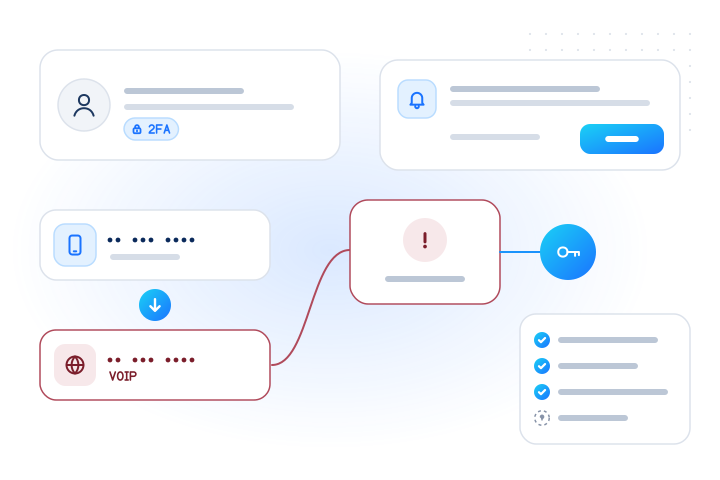
Changing the phone number on an account is a high-risk action, because the number usually controls password resets and one-time codes. Treat it like a password change: re-authenticate with an existing factor, verify the new number, notify the old channels, hold sensitive actions for a while, and score the change with device, session and number signals.
Why is the change-number event so risky?
Because it moves the keys. On most consumer services the phone number is both a login factor and the recovery channel. Whoever controls it can reset the password, receive codes and lock the owner out.
Attackers reach that point in two ways:
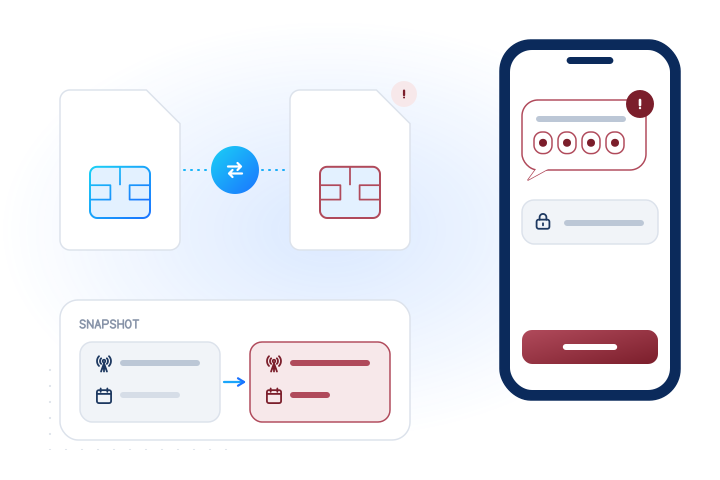
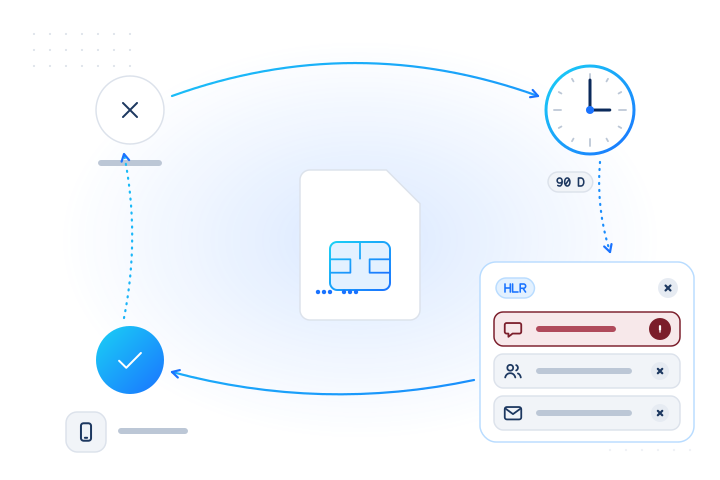
- Outside your app, by taking over the number itself through a SIM swap or a port-out. The FBI notes that after a swap, criminals "send 'Forgot Password' or 'Account Recovery' requests" to accounts tied to the victim's number (FBI IC3, 2022). See SIM swap fraud: signals to check.
- Inside your app, by getting into a session (stolen password, phished session, shared device) and then replacing the phone number with their own, so that every future code goes to them.
This checklist is about the second route, and about making the first route less damaging. OWASP puts it plainly: because attackers can exploit factor changes to take over accounts, the process "must be strictly secured" (OWASP).
What does the secure change-number flow look like?
Five steps, in order. Each one blocks a different shortcut.
| Step | What happens | Blocks |
|---|---|---|
| 1. Re-authenticate | Ask for an existing factor: passkey, authenticator code, password plus a code to the current number or e-mail | A hijacked session changing the number silently |
| 2. Score the request | Device, session age, location, recent account changes, number facts | Obvious attacks, before any code is sent |
| 3. Verify the new number | One-time code to the new number | Typos; numbers the requester doesn't hold |
| 4. Notify the old channels | Message to the old number and e-mail, with a "this wasn't me" link | Silent takeovers |
| 5. Hold sensitive actions | Delay payouts, withdrawals and further security changes for a period | Fast cash-out after a takeover |
The OWASP MFA cheat sheet lists the same core controls: "Require reauthentication with an existing enrolled factor before allowing changes", "Do not rely solely on the active session", "Notify the user through out-of-band channels (such as email or push notification) whenever an MFA factor is changed", and "Consider applying delays or step-up verification for high-value accounts" (OWASP).
What should the change-number checklist cover?
Use it as a review list for your flow. Every "no" is a gap.
Before the change
- The change requires re-authentication with a factor the user already had, not just an active session.
- If the only existing factor is SMS to the current number, the flow also confirms by e-mail or another bound factor.
- Sessions older than a short window must re-authenticate before security settings open.
- Number changes are rate-limited per account and per device.
- The request is scored with device, session and number signals (see below).
During the change
- The new number is normalized to E.164 and validated before any code is sent.
- The new number receives a one-time code, and the code expires quickly.
- Failed code attempts are limited. NIST requires verifiers to limit consecutive failed attempts on an account (NIST, 2025).
- The new number isn't already the verified number of many other accounts.
- Support staff can't change the number on request without the same checks.
After the change
- The old number and the e-mail address get a notification with time, device and a "this wasn't me" link.
- Payouts, withdrawals, e-mail changes and further factor changes are held for a cooling-off period.
- The "this wasn't me" link freezes the account and starts recovery, rather than just logging a complaint.
- The event is logged with the risk score and the signals behind it.
Which signals should score the request?
Most signals come from your own data. Number facts add a few more. None proves identity. Together they separate routine changes from attacks.
| Signal | Source | Raises risk when |
|---|---|---|
| Device | Your session data | The device has never been seen on this account |
| Session age | Your session data | The session started minutes ago, especially via a password reset |
| Recent changes | Account history | Password or e-mail changed in the last days |
| Location | IP and account data | Country of IP, account and new number all differ |
| Line type of the new number | Carrier lookup | voip where your users normally have mobile numbers |
| Country of the new number | Normalization | A country the user has no history with |
| Messenger presence | Messenger check | No account anywhere, combined with other risk signals |
| Reuse | Your database | The same new number is on other accounts |
Carrier facts come from MobileValidate's carrier lookup: line_type, carrier, country and original_carrier when the number was ported. Messenger presence comes from checks such as the WhatsApp number check. A messenger account shows that the number has been used on a phone. It doesn't show who uses it.
What does the number check look like in code?
Run it after re-authentication and before sending a code to the new number. A real test-mode request:
curl https://api.mobilevalidate.com/v1/lookup \
  -H "Authorization: Bearer $MOBILEVALIDATE_API_KEY" \
  -H "Content-Type: application/json" \
  -H "Idempotency-Key: chg-acct-5521-01" \
  -d '{"numbers": ["+447700900002"], "checks": ["carrier", "whatsapp"], "wait": 5}'
Response (excerpt of results[0].checks, test mode):
{
  "network.carrier": {"status": "unknown", "registered": null, "reason": "NO_DATA", "billed": false},
  "whatsapp.registered": {"status": "completed", "registered": false, "billed": false, "reason": null}
}
Here the carrier has no data and the number has no WhatsApp account. Neither is a reason to refuse on its own. Feed both into the score:
function numberChangeRisk(ctx, r) {
  let score = 0;
  if (ctx.newDevice) score += 2;
  if (ctx.sessionMinutes < 15) score += 1;
  if (ctx.passwordChangedDaysAgo !== null && ctx.passwordChangedDaysAgo < 3) score += 2;
  const line = r.checks?.["network.carrier"]?.attributes?.line_type;   // undefined when unknown
  if (line === "voip") score += 1;
  if (r.checks?.["whatsapp.registered"]?.registered === false) score += 0.5; // weak on its own; null adds nothing
  if (ctx.numberOnOtherAccounts > 0) score += 2;
  return score >= 4 ? "manual_review" : score >= 2 ? "step_up" : "allow_with_hold";
}
Keep null and false apart. A null means we have no answer, and it should never add risk.
What should the notification say?
The notification to the old number and e-mail is your last chance to involve the real owner, so make it easy to act on:
- What changed and when: "The phone number on your account was changed on 9 October at 14:32 UTC."
- Where from: device type and approximate region, taken from the session. Don't include the full new number; the last two digits are enough.
- What happens next: which actions are on hold and until when.
- One clear action: a "this wasn't me" link that freezes the account and opens recovery, valid for longer than the hold period.
- No links that log the user in. Attackers copy notification e-mails for phishing. Tell users to open the app or type your address themselves.
Send it through every channel you still trust, not only the one that just changed. An attacker who controls the new number shouldn't be the only person who hears about the change.
How should recovery work when the owner loses access?
Recovery is the other side of the same door. A weak recovery flow undoes everything above. MITRE's CWE-640 describes weak password recovery as making it "more likely that it would be possible for a person other than the legitimate system user to gain access to that user's account" (MITRE).
- Don't make SMS the only way back. OWASP's forgot-password guidance covers designs based on URL tokens, PINs and offline methods, and asks for "a consistent message for both existent and non-existent accounts" (OWASP).
- Offer recovery codes and a second factor at enrolment. NIST asks services to encourage subscribers to keep at least two separate means of authentication and says an account recovery event "always causes one or more notifications" to the subscriber (NIST, 2025).
- Treat a recovery that ends in a number change as the highest risk case. Apply the full hold.
- Train support. A persuasive caller is the oldest recovery attack. Support should follow the same checks as the product.
How do you avoid locking out real users?
People change numbers for ordinary reasons: a new contract, a move abroad, a lost phone. A good flow lets them through with a small delay rather than a dead end.
- Explain the hold. "For your security, withdrawals are paused until tomorrow" is acceptable to most users. An unexplained failure is not.
- Give a path when the old number is gone. Use e-mail, a passkey, recovery codes or an identity check instead of the lost number.
- Measure false positives. Track how many step-ups and reviews ended with a confirmed legitimate user, and loosen rules that mostly catch customers.
- Don't punish missing data. Unknown lookups, new devices and travel are common. Only combinations should escalate.
What are the key takeaways?
- A phone-number change hands over the recovery channel, so it deserves the same protection as a password change.
- Re-authenticate with an existing factor, verify the new number, notify the old channels and hold sensitive actions.
- Score each change with device, session and account-history signals, plus number facts such as line type and messenger presence.
- Lookups describe numbers, not owners. Unknown answers are free and should never add risk.
- Strong recovery (second factor, recovery codes, trained support) keeps the whole flow from being bypassed.
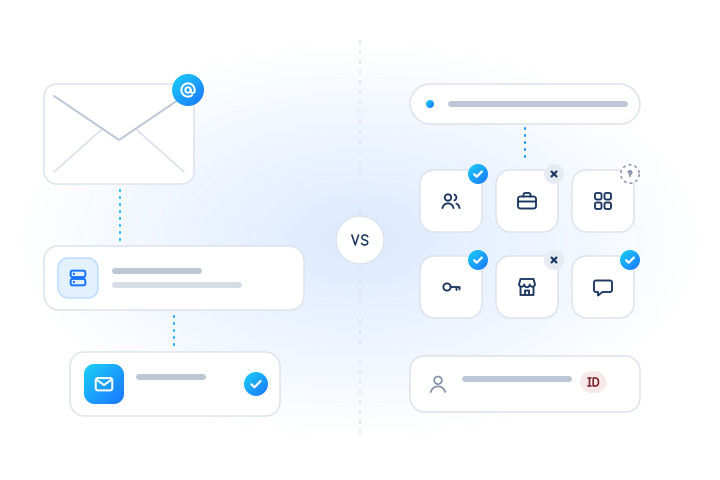
The account security use case shows where these checks fit in login and recovery. For combining e-mail and phone signals, read e-mail verification vs account existence checks.
Sources
- Multifactor Authentication Cheat Sheet — OWASP
- Forgot Password Cheat Sheet — OWASP
- CWE-640: Weak Password Recovery Mechanism for Forgotten Password — MITRE
- NIST SP 800-63B-4: Digital Identity Guidelines — Authentication and Authenticator Management — NIST, 2025
- Criminals Increasing SIM Swap Schemes to Steal Millions of Dollars from US Public (I-020822-PSA) — FBI Internet Crime Complaint Center, 2022
Frequently asked questions
Why do attackers change the phone number first?
Because the phone number is often the recovery channel. Once it points to the attacker, password resets and one-time codes go to them, and the real owner loses the way back in.
Should a new phone number be verified with an SMS code?
Yes, to prove the new number works, but that proves possession of the new number only. It says nothing about whether the person is the account owner, so also require re-authentication with an existing factor.
How long should a cooling-off period be after a number change?
There is no standard value. Many services hold payouts, withdrawals or further security changes for a period measured in hours to a few days, scaled to the value of the account. Tell the user about the hold in the notification.
Can a number check tell me the new number belongs to the user?
No. A lookup describes the number (line type, carrier, porting hint, messenger presence), not its owner. Use it as one risk signal next to re-authentication, device and session signals.
Related services and guides
More from the blog
All articlesFraud prevention
SIM swap fraud: the signals to check before you trust an SMS code
What a SIM swap is, which SIM-swap data exists and who can get it, and which signals to combine before you trust an SMS code when that data is missing.
9 min read
Guides
E-mail verification vs account existence checks: what's the difference?
Mailbox validation says an address can receive mail. An account check says it is registered on a service. When to use each, and the privacy rules.
8 min read
Fraud prevention
Recycled phone numbers: how number providers can check a number before reissuing it
For number providers, MVNOs and virtual-number resellers: quarantine rules by country, the FCC database, and HLR and app-account checks before reissue.
12 min read