On this page
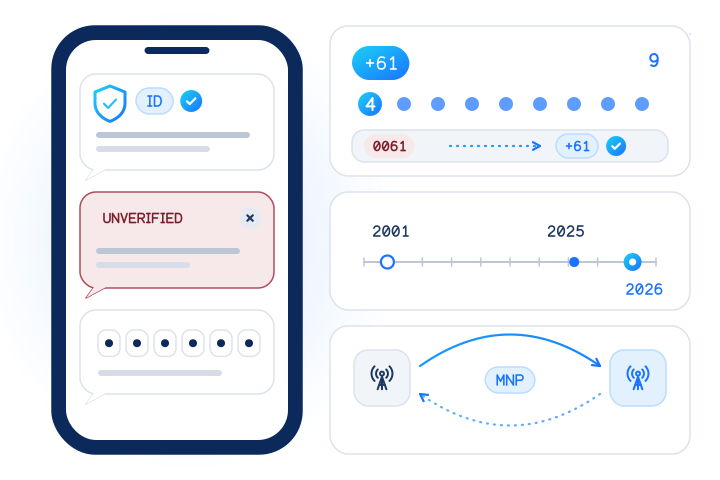
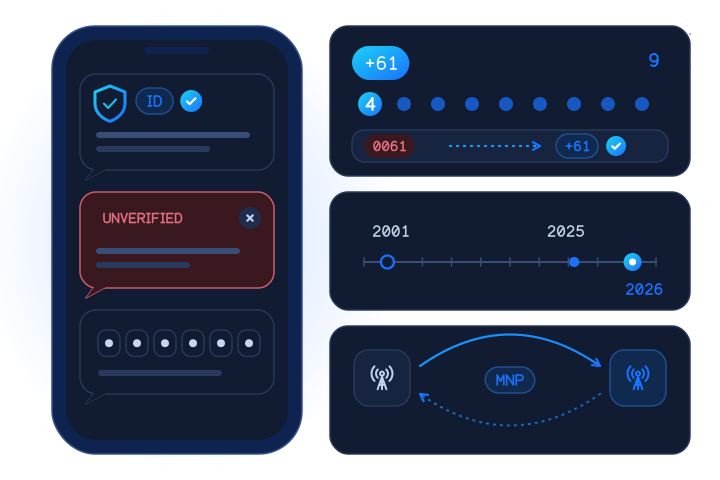
Australian numbers use the country code +61. A mobile number has 10 digits at home, starting 04 (04XX XXX XXX), and 9 digits after the code, so in E.164 it looks like +61 4XX XXX XXX. Landlines are also 10 digits: a one-digit area code (02, 03, 07 or 08) plus eight digits. Numbers have been portable between mobile networks since 2001, and since 1 July 2026 a branded SMS shows its sender name only if that name is in the ACMA's SMS Sender ID Register.
This guide is part of our phone numbers by country series. The tables are generated from libphonenumber's metadata, our MNP atlas and our public catalog. Generated examples are masked with X; the full numbers in the text and code come from the ACMA's list of numbers reserved for fiction, which belong to nobody. We read the Australian Communications and Media Authority (ACMA) pages, the legislation and the industry codes cited below on 2026-11-02. This is a summary, not legal advice.
What does an Australian phone number look like?
A mobile number is 04XX XXX XXX at home: the trunk prefix 0, then 4, then eight more digits. From abroad it is +61 4XX XXX XXX. A Sydney landline is (02) XXXX XXXX at home and +61 2 XXXX XXXX from abroad. The Telecommunications Numbering Plan 2025, which the ACMA made in March 2025 to replace the 2015 plan, defines each type by its first digits and its length. Mobile numbers are 10 digits starting 04 or 05, and for the first time they are a number type of their own rather than a kind of "special services" number (Numbering Plan 2025, section 18 and Schedule 4).
| Item | Value |
|---|---|
| Country calling code | +61 |
| International call prefix (dialling out) | 0011 |
| Trunk prefix (dialling at home) | 0 |
| Mobile: digits after +61 | 9 |
| Fixed line: digits after +61 | 9 |
| Toll-free: digits after +61 | 7, 10 |
| Premium rate: digits after +61 | 10 |
| Shared cost: digits after +61 | 6, 8, 10, 12 |
| VoIP: digits after +61 | 9 |
| Pager: digits after +61 | 5–9 |
| Mobile, national format (masked) | 041X XXX XXX |
| Mobile, international (masked) | +61 41X XXX XXX |
| Mobile, E.164 (masked) | +6141XXXXXXX |
| Fixed line, national format (masked) | (02) 0XXX XXXX |
| Fixed line, international (masked) | +61 2 0XXX XXXX |
| Fixed line, E.164 (masked) | +6120XXXXXXX |
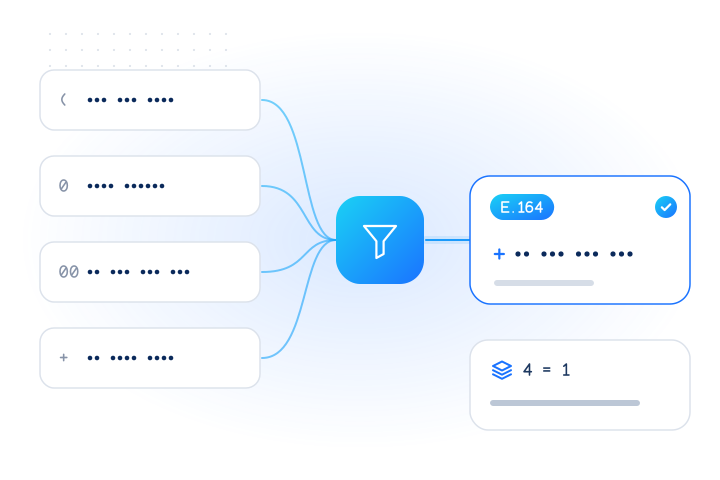
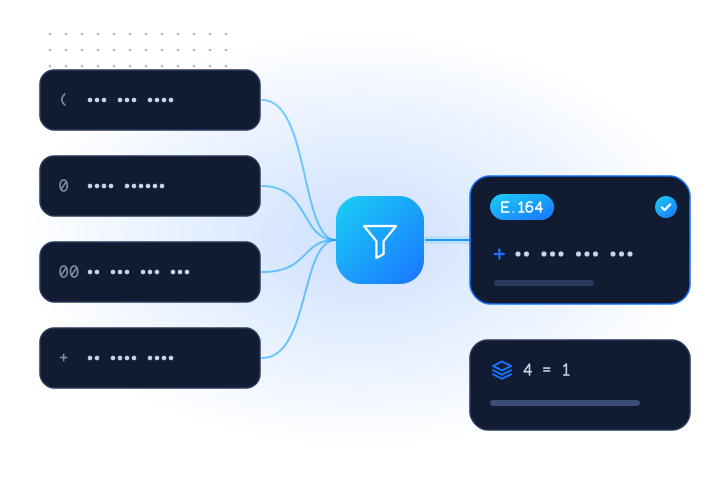
Two details trip up forms and parsers. First, Australia's international exit code is 0011, not 00. A number written 0061 4XX XXX XXX looks international, but a library set to Australia reads the 0 as the trunk prefix and rejects the result (row 3 of the test table below). Rewrite a leading 0061 to +61 before parsing. Second, people often write +61 (0) 4XX… with the trunk zero in brackets; good parsers drop it, but don't store it.
Area codes and short business numbers
| Prefix | What it is | Length at home | Example (reserved for fiction) |
|---|---|---|---|
02 | Central East: most of New South Wales, the ACT, parts of northern Victoria | 10 digits | (02) 5550 XXXX |
03 | South East: Victoria and Tasmania | 10 digits | (03) 7010 XXXX |
07 | North East: Queensland | 10 digits | (07) 5550 XXXX |
08 | Central and West: South Australia, Western Australia, Northern Territory | 10 digits | (08) 7010 XXXX |
04 | Mobile | 10 digits | 0491 570 006 |
1800 | Freephone (free to the caller) | 10 digits | 1800 975 707 |
1300 | Local rate (the caller pays a local-call charge) | 10 digits | 1300 975 707 |
13 | Local rate, short form | 6 digits | 13 XX XX |
0900–0940 | Internet of things (IoT) services, new in the 2025 plan | 10 digits | none reserved |
000, 112, 106 | Emergency (112 from mobiles, 106 for text telephones) | 3 digits | never use in tests |
Sources: Numbering Plan 2025, Schedules 1 to 5 and section 20; regions as the ACMA names them on its fictional numbers page. A 1345 local rate number (8 digits) is for security alarm monitoring only. libphonenumber labels 13 and 1300 numbers SHARED_COST and 1800 numbers TOLL_FREE, so check for those types if you only want numbers that can receive SMS.
Which numbers can I use in examples and tests?
The ACMA reserves numbers "for creative works, such as in TV shows and films" that "do not belong to people or businesses". Its list, last updated on 3 September 2026, includes 30 mobile numbers, eight landline blocks, six freephone numbers and five local rate numbers (ACMA):
| Type | Reserved numbers (selection) |
|---|---|
| Mobile | 0491 570 006, 0491 570 156 to 0491 570 159, 0491 570 110, 0491 570 313, 0491 570 737, 0491 571 266 and 21 more in 0491 571 to 0491 579 |
| Landline | (02), (03), (07) or (08), then 5550 xxxx or 7010 xxxx (any last four digits) |
| Freephone | 1800 160 401, 1800 975 707 to 1800 975 711 |
| Local rate | 1300 975 707 to 1300 975 711 |
We checked: libphonenumber accepts all of these as valid, with the right type (mobile, fixed line, toll-free, shared cost). That makes them good fixtures for unit tests and documentation. They aren't reachable, so don't use them for delivery tests.
Which prefixes are mobile numbers?
Every mobile number in use starts 04. For each 3-digit block, the generator counted every 9-digit number that libphonenumber's mobile pattern for AU accepts:
| National prefix | International | Share of the block that is mobile (9-digit numbers) | 3-digit sub-blocks that aren't fully mobile |
|---|---|---|---|
040 | +61 40 | 100% | — |
041 | +61 41 | 100% | — |
042 | +61 42 | 100% | — |
043 | +61 43 | 100% | — |
044 | +61 44 | 50.0% | not mobile: 0441–0443, 0445, 0446 |
045 | +61 45 | 90.0% | not mobile: 0453 |
046 | +61 46 | 100% | — |
047 | +61 47 | 82.0% | not mobile: 0471; partly mobile: 0479 (20.0%) |
048 | +61 48 | 98.0% | partly mobile: 0483 (80.0%) |
049 | +61 49 | 84.0% | not mobile: 0496; partly mobile: 0495 (40.0%) |
Blocks 040 to 043 and 046 are fully mobile. In 044, 045 and 047 to 049, some sub-blocks aren't open as mobile in the metadata, so a 10-digit number starting 04 can still be invalid. That is why a plain ^04\d{8}$ check isn't enough.
What about 05 mobile numbers?
The ACMA planned the 05 range in 2012, when it estimated Australia would need about 100 million more mobile numbers and that the roughly 60 million 04 numbers could run out between 2017 and 2020 (The Register, 2012). The 2025 plan keeps 05 as a mobile range. As of 2 November 2026, though, libphonenumber treats every 05 number as invalid, and we found no ACMA notice that 05 mobile numbers are being issued. If that changes, the library's metadata will change first; keep it updated rather than hard-coding 04.
Which operator holds each prefix?
Mobile blocks were given to networks in small pieces. libphonenumber's carrier file names the original holder for each block, for example:
| National block | Original range holder (libphonenumber carrier data) |
|---|---|
0400, 0407–0409, 0417–0419, 0427–0429, 0436–0439 | Telstra |
0401–0403, 0411–0413, 0421–0423, 0431, 0432, 0434, 0435 | Optus |
0404–0406, 0410, 0414–0416, 0420, 0424–0426, 0430, 0433 | Vodafone |
The file also lists smaller holders, such as mobile virtual network operators and satellite providers, in the 044 to 049 blocks. Read this table as "who was first given the range". It tells you nothing about the network a ported number is on today.
How do I validate an Australian number in code?
Use a libphonenumber port with full metadata and the default region AU, fix the 0061 form first, then keep only mobiles.
Python (pip install phonenumbers):
import re

import phonenumbers


def normalize_au(raw: str) -> str | None:
    """E.164 for an Australian mobile (04), or None."""
    s = re.sub(r"[\s().-]", "", raw)
    if s.startswith("0061"):  # 00 is not Australia's exit code (0011 is)
        s = "+61" + s[4:]
    try:
        n = phonenumbers.parse(s, "AU")
    except phonenumbers.NumberParseException:
        return None
    if (not phonenumbers.is_valid_number(n) or phonenumbers.region_code_for_number(n) != "AU"
            or phonenumbers.number_type(n) != phonenumbers.PhoneNumberType.MOBILE):
        return None
    return phonenumbers.format_number(n, phonenumbers.PhoneNumberFormat.E164)
JavaScript (npm install libphonenumber-js):
import { parsePhoneNumberFromString } from "libphonenumber-js/max";

/** "04XX XXX XXX", "+61 4XX …", "0011 61 …" or "0061 …" → E.164 for an Australian mobile, or null. */
export function normalizeAu(raw) {
  let s = String(raw).replace(/[\s().-]/g, "");
  if (s.startsWith("0061")) s = "+61" + s.slice(4); // 00 is not Australia's exit code (0011 is)
  const phone = parsePhoneNumberFromString(s, "AU");
  return phone?.isValid() && phone.country === "AU" && phone.getType() === "MOBILE" ? phone.number : null;
}
We ran both on 2026-11-02 (Python 3.12 with phonenumbers 9.0.42, Node.js 24 with libphonenumber-js 1.13.13) on the ACMA's fictional numbers. Both printed the same results:
| Input | Output |
|---|---|
0491 570 006 | +61491570006 |
+61 491 570 156 | +61491570156 |
0011 61 491 570 157 | +61491570157 |
0061 491 570 158 | +61491570158 (without the rewrite: rejected) |
61491570159 | +61491570159 |
+61 (0) 491 570 110 | +61491570110 |
(02) 5550 1234 | None / null (landline) |
1800 975 707 | None / null (freephone) |
0550 123 456 | None / null (05 not open) |
The generated test table below uses masked numbers. The shape regex column tests the pattern most tutorials give, after spaces, dashes and brackets are removed:
| # | Case | Input (masked) | Shape regex ^(?:\+61|0061|0)?4\d{8}$ | libphonenumber (AU) |
|---|---|---|---|---|
| 1 | National, with trunk prefix | 041X XXX XXX | passes | valid, MOBILE |
| 2 | International, with spaces | +61 41X XXX XXX | passes | valid, MOBILE |
| 3 | International dialling prefix 00 | 0061 41X XXX XXX | passes | invalid |
| 4 | E.164 | +6141XXXXXXX | passes | valid, MOBILE |
| 5 | Dashes and brackets | (041X) XXX-XXX | passes | valid, MOBILE |
| 6 | One digit short | 041XXXXXX | fails | invalid |
| 7 | One digit too many | 041XXXXXXXX | fails | invalid |
| 8 | Fixed line | (02) 0XXX XXXX | fails | valid, FIXED_LINE |
| 9 | Toll-free range | 180X XXX XXX | fails | valid, TOLL_FREE |
Row 3 is the one to remember: the regex accepts 0061…, but a library set to Australia doesn't, so the two disagree until you rewrite the prefix. Our post on why an E.164 regex is not enough shows the same problem in other countries, and our Python and JavaScript guides cover more languages.
Does number portability change the carrier?
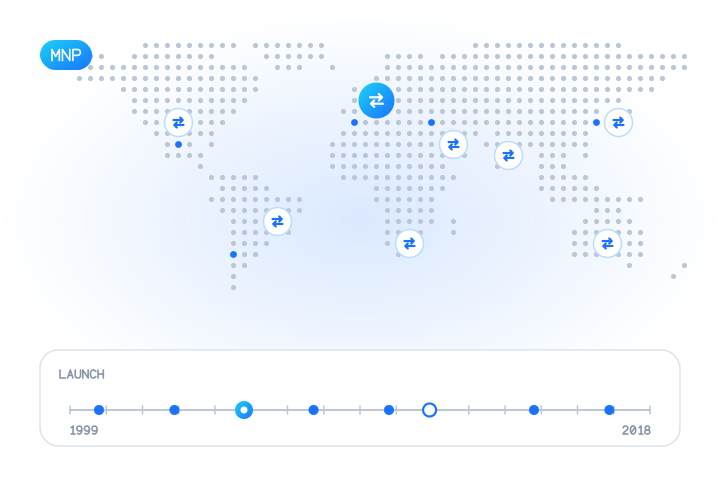
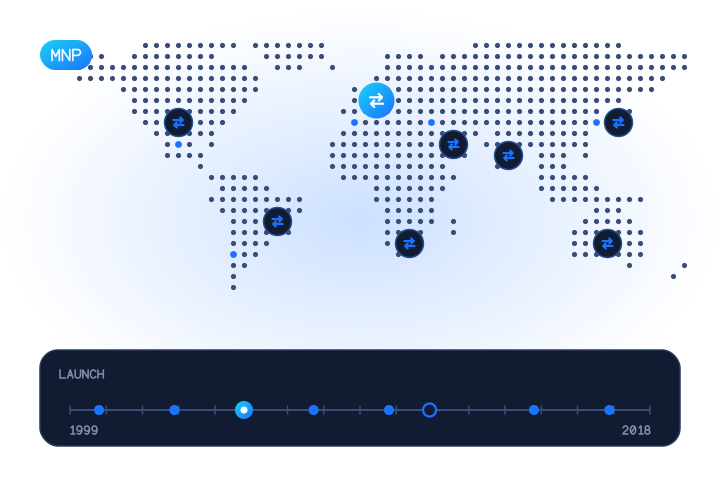
Yes. The Australian Communications Authority, the ACMA's predecessor, fixed 25 September 2001 as the date from which every mobile carrier and service provider had to offer mobile number portability (MNP), as the background to the industry code records (C570:2024). The code is now published by the Australian Telecommunications Alliance, the new name of Communications Alliance. Its rules, as of the December 2024 edition:
- Speed. The losing network must complete 90% of ports within 3 hours of porting operation and 99% within 2 business days (clause 3.5.1). The ACMA tells consumers a mobile port "usually takes 3 hours" (ACMA).
- Hours. Standard porting hours are 8 am to 8 pm on business days and 10 am to 6 pm on Saturdays (Australian Eastern time). The 2024 edition added longer and Sunday hours as a voluntary option.
- Authorisation. A customer authorisation is now valid for 60 calendar days instead of 30.
- Identity. Before a mobile port the new provider must run an extra identity check, such as a one-time SMS code, a call to the number or a look at identity documents (ACMA). This is a defence against port-out fraud.
Prepaid mobiles can be ported, as can landline, 1800, 13 and 1300 numbers. Landline ports take longer: 8 to 15 days for a single number, up to 30 days for complex ones. A disconnected number can't be ported, and it goes into quarantine for 6 to 12 months before it can be issued again, which is one reason old lists decay (number recycling).
The Australia row of our MNP atlas:
| Item | Value |
|---|---|
| Mobile number portability | Yes |
| Mobile porting since | 2001-09-25 |
| Maximum porting time | 90% within 3 standard porting hours, 99% within 2 business days |
| Governing rule | C570:2024 Mobile Number Portability Industry Code (Australian Telecommunications Alliance) cl. 3.5.1; Telecommunications Numbering Plan 2025 ch. 10 |
| Published porting volume | none published |
| Source | acma.gov.au, austelco.org.au |
| Checked | 2026-11-02 |
Porting started on 25 September 2001, and the binding service level is the C570:2024 one (90% in 3 hours, 99% in 2 business days). Our MNP atlas compares Australia with other countries. For routing, pricing or fraud rules, look up the current network per number instead of reading the prefix; see how to check if a number is ported.
Which messaging apps and channels reach people?
SMS reaches every active mobile, but branded SMS changed on 1 July 2026 (next section). We didn't find a published source that measures messaging-app use in Australia in a way we can verify, so we don't quote shares. The practical answer is to measure your own opted-in customers: check which apps they are registered on, route each person to the channel they use, and keep SMS as the fallback. Our channel-by-country guide shows the method.
How do I check WhatsApp registration for an Australian customer list?
Normalise every row first, then run one check per number. A check tells you whether a number is registered at the time of the check. It can't tell you whether the person wants your messages:
| Answer | What it means | What to do |
|---|---|---|
registered: true | The number has a WhatsApp account at checked_at | Offer WhatsApp to customers who opted in to it |
registered: false | No account at checked_at | Use SMS or another channel |
unknown | No conclusive answer (not billed) | Keep the current channel; retry later |
invalid_number | Failed format validation (not billed) | Fix the data at the source |
For lists, use a bulk job. Upload a CSV whose numbers are written nationally (04XX XXX XXX) with default_country=AU:
curl https://api.mobilevalidate.com/v1/jobs \
  -H "Authorization: Bearer $MOBILEVALIDATE_API_KEY" \
  -F file=@customers.csv -F checks=whatsapp,mnp -F default_country=AU
Send the same body to POST /v1/jobs/estimate first: it is free and shows the maximum cost before anything runs. Unknown or inconclusive results are never charged; see current prices. Our bulk WhatsApp number check post walks through the whole flow.
What are the rules for SMS, sender IDs and calls?
These summarise the legislation, industry codes and ACMA guidance as we read them on 2026-11-02. Not legal advice; ask counsel how they apply to you.
The SMS Sender ID Register (from 1 July 2026)
A sender ID is the name shown at the top of a text instead of a phone number, such as a bank's or a clinic's name. The ACMA's SMS Sender ID Register lists the sender IDs each organisation may use, and the Telecommunications (SMS Sender ID Register) Industry Standard 2025 sets the rules for telcos. Its main obligations took effect on 1 July 2026 (Industry Standard, section 2):
- Unregistered means "Unverified". Before delivering a branded text, the receiving Australian network must check the register, using register data no more than 24 hours old. If the sender ID isn't registered, it replaces it with
Unverified(section 18). The ACMA says these texts are grouped in one thread on the recipient's phone, as a warning that they may be scams (ACMA, 2025). - Only participating telcos. From 1 July 2026, Australian telcos must take part in the register to send messages with sender IDs (ACMA, 2025).
- Register through your telco. An organisation registers each sender ID through every telco or message provider it sends with, and must show a valid use case: the name must match its business name, company name, trade mark or a
.audomain it holds. The ACMA then checks the organisation and the person's identity (ACMA; Industry Standard, section 11). - Senders abroad. A branded text that reaches Australia straight from an overseas provider may be passed on only once it has been over-stamped
Unverified(sections 17 and 18). To keep its name, an overseas organisation registers through an Australian provider that has a written agreement with its overseas provider (section 13). See the ACMA's register pages.
Texts sent from an ordinary phone number aren't sender ID messages, so they aren't over-stamped. If you send OTPs to Australia under a brand name, confirm your provider participates and your sender ID is registered; an OTP from "Unverified" teaches users to trust scam-looking texts.
Consent for marketing texts: the Spam Act 2003
A marketing SMS is a "commercial electronic message" under the Spam Act 2003. The ACMA's guidance sums up the three rules (ACMA):
- Consent. Express consent (a form, a ticked box, a call) or, in narrow cases, inferred consent from an existing relationship the message is directly related to. A purchase alone isn't enough, and you can't send a message asking for consent. Keep a record: it is up to the sender to prove consent.
- Identify yourself. Name the business that authorised the message and give contact details that stay correct for at least 30 days.
- Unsubscribe. Every message needs a free, working opt-out, honoured within 5 working days. An alphanumeric sender ID can't usually receive replies, so "Reply STOP" doesn't work from one; give another way, such as a link or a freecall number.
The Act reaches senders abroad: a message has an "Australian link" if, among other things, the device used to read it is in Australia or the recipient is in Australia when it is read (Spam Act 2003, section 7).
Calls: the Do Not Call Register
The Do Not Call Register covers telemarketing calls and marketing faxes, not texts (Do Not Call Register). Numbers used mainly for private or domestic purposes, fax-only numbers, government numbers and emergency numbers can be registered, and a registration stays in force indefinitely unless removed (Do Not Call Register Act 2006, sections 14 and 17). Telemarketers "wash" their lists against the register; a marketer that washed its list in the 30 days before a call and wasn't told the number was registered isn't in breach. Calls to unregistered numbers must still follow the permitted calling times in the Telecommunications (Telemarketing and Research Calls) Industry Standard 2017.
Scam calls and scam texts: industry code C661
The industry code C661:2022 Reducing Scam Calls and Scam SMs sets out how carriers and service providers identify, trace, block and otherwise disrupt scam calls and texts, share information with each other and with government agencies, and report to the ACMA (C661:2022). Blocking can apply to the number sending scam texts or to an alphanumeric sender ID used for them. For a legitimate sender, the practical effect is that traffic that looks like scams, such as bursts from new numbers or brand-like names, can be blocked on the way.
What that means for OTP
A one-time passcode the user asked for isn't marketing, so the Spam Act's consent rule doesn't apply to it, but it travels the same routes. Send it from a registered sender ID or a number you control, keep it free of offers, and don't reuse numbers collected for verification for marketing unless the person opted in.
What changed recently?
The rows for AU and +61 in our numbering-plan changes dataset, built from libphonenumber's release notes:
| Change named in the release notes (2019-01-08 to 2026-09-23) | Releases |
|---|---|
| Numbering-plan metadata (validation, lengths, types) | 25 |
| Original-carrier prefix data | 20 |
| Geocoding (area names) | 18 |
| Alternate formatting | 1 |
| Short numbers | 1 |
| All | 65 |
Latest numbering-plan updates for AU: 2025-11-06 (v9.0.18), 2025-10-23 (v9.0.17), 2025-07-17 (v9.0.10), 2025-06-04 (v9.0.7), 2024-05-15 (v8.13.37).
Australia's metadata changed often: in 25 releases since 2019, with the latest in November 2025. A library a few months old can reject newly opened mobile blocks, so update it at least monthly. Beyond numbering, the changes that matter are the Numbering Plan 2025 (in force since March 2025, with mobile numbers as their own type and a new IoT range), the SMS Sender ID Register (1 July 2026) and the 2024 edition of the porting code.
What can MobileValidate check for Australian numbers?
Generated from our public catalog:
| Check | Accepts Australia numbers | Notes |
|---|---|---|
| Format and country (every lookup) | Yes | Each number is parsed first; an invalid number returns invalid_number and is never billed. |
| Carrier lookup (beta) | Yes | Line type and current network where data exists; no data means unknown, not billed. Real time and bulk. |
| US/CA carrier lookup (premium) | No (US, CA only) | Answers unsupported_country for other countries, not billed. |
| Live network status (HLR) | Yes | Live reachability, porting, roaming (true or false) and current network; unknown is free. Real time and bulk. |
| Number portability (MNP) | Yes | Ported or not ported, and the current network code; unknown is free. Real time and bulk. |
| Spam reputation | Limited access | All countries except sanctioned ones; report coverage is strongest in North America and Europe. |
| Messaging apps | Yes: WhatsApp, Telegram, Viber, Signal*, iMessage*, RCS*, LINE*, Zalo, Botim*, Facebook Messenger* | Registered, not registered or unknown; unknown is free. |
| Social networks | Yes: Facebook, Instagram, Threads, X (Twitter), TikTok*, Snapchat* | Not for Australia numbers: LinkedIn (US, IN only). |
| Online accounts (Apple, Amazon, Microsoft, Netflix) | Yes: Apple, Amazon, Microsoft, Netflix | Registered, not registered or unknown; unknown is free. |
* bulk jobs only. Catalog as fetched on 2026-11-02; the live list is at GET /v1/services.
A lookup returns network and registration facts. It never returns a subscriber's name, address or identity documents, and we don't offer "number details" searches.
Here is a practical flow for a customer list: normalise with normalize_au(), then one real-time lookup gives the porting status, the current network code and WhatsApp registration. It uses the public sandbox key mv_test_publicSandboxn9ZgneuhR1B9CRfKG3fulym and our test values. The sandbox accepts only those UK drama numbers, so the example uses them. With a live key, pass the output of normalize_au().
import os

import requests  # pip install requests

API = "https://api.mobilevalidate.com/v1/lookup"
KEY = os.environ["MOBILEVALIDATE_API_KEY"]


def route_facts(numbers: list[str]) -> dict[str, dict]:
    """Porting status, current network code and WhatsApp registration. None means we don't know."""
    r = requests.post(API, headers={"Authorization": f"Bearer {KEY}"}, timeout=15,
                      json={"numbers": numbers, "checks": ["mnp", "whatsapp"], "wait": 5})
    r.raise_for_status()
    out = {}
    for row in r.json()["results"]:
        mnp, wa = row["checks"]["number.mnp"], row["checks"]["whatsapp.registered"]
        attrs = mnp["attributes"] or {}
        out[row["e164"]] = {
            "porting": attrs.get("porting"),
            "mcc_mnc": attrs.get("mcc_mnc"),
            "whatsapp": wa["registered"] if wa["status"] == "completed" else None,
        }
    return out


for number, facts in route_facts(["+447700900001", "+447700900002", "+447700900005"]).items():
    print(number, facts)
Output with the sandbox key on 2026-11-02:
+447700900001 {'porting': 'not_ported', 'mcc_mnc': '23415', 'whatsapp': True}
+447700900002 {'porting': 'not_ported', 'mcc_mnc': '23415', 'whatsapp': False}
+447700900005 {'porting': None, 'mcc_mnc': None, 'whatsapp': None}
Keep None apart from False: None means we don't know, and it's never billed. Requests with 20 or more consecutive numbers are refused (403 suspected_enumeration), and our acceptable use policy forbids finding recipients for unsolicited messages. People can object through our opt-out form. See MNP lookup, HLR lookup and WhatsApp number check for the fields.
What are the key takeaways?
- Australian mobiles are
+61 4plus eight digits,04XX XXX XXXat home; store the E.164 form. - The exit code is
0011, so rewrite0061…to+61…before parsing. A plain04regex accepts blocks that aren't open. 05is a mobile range in the 2025 plan but isn't in use yet; let an updated library decide.- Use the ACMA's fictional numbers (
0491 570 006and others) in tests and docs, never real ones. - Porting has run since 25 September 2001 and most ports finish within 3 hours, so the prefix doesn't show the current network.
- Since 1 July 2026, register every branded sender ID or your texts arrive as "Unverified"; marketing texts also need Spam Act consent and an opt-out.
Platform, regulator and company names are used descriptively. MobileValidate is not affiliated with any of them.
Sources
- Telecommunications Numbering Plan 2025 (F2025L00409, registered 24 March 2025) and explanatory statement — Australian Communications and Media Authority, Federal Register of Legislation, 2025
- Phone numbers for use in TV shows, films and creative works (last updated 3 September 2026) — Australian Communications and Media Authority, 2026
- Keep or port your phone number — Australian Communications and Media Authority, 2026
- C570:2024 Mobile Number Portability Industry Code (December 2024) — Australian Telecommunications Alliance (formerly Communications Alliance), 2024
- Telecommunications (SMS Sender ID Register) Industry Standard 2025 (F2025L01235) — Australian Communications and Media Authority, Federal Register of Legislation, 2025
- SMS Sender ID Register — Australian Communications and Media Authority, 2026
- Call to action for all organisations using branded SMS (MR 37/2025, 1 December 2025) — Australian Communications and Media Authority, 2025
- Register a sender ID if you have an ABN — Australian Communications and Media Authority, 2026
- C661:2022 Reducing Scam Calls and Scam SMs Industry Code (July 2022) — Australian Telecommunications Alliance (formerly Communications Alliance), 2022
- Spam Act 2003 (compilation of 10 March 2016) — Federal Register of Legislation, 2016
- Avoid sending spam — Australian Communications and Media Authority, 2026
- Do Not Call Register Act 2006 (compilation of 1 September 2021) — Federal Register of Legislation, 2021
- Do Not Call Register: industry overview and industry FAQs — Australian Communications and Media Authority, 2026
- Australia to get 05 mobile numbers (18 July 2012) — The Register, 2012
- libphonenumber PhoneNumberMetadata.xml (region AU) and carrier prefix data (61.txt) — libphonenumber project (Apache License 2.0), 2026
Frequently asked questions
How many digits is an Australian phone number?
Ten digits when written at home, including the leading 0, and nine digits after the country code +61. A mobile looks like 04XX XXX XXX nationally and +61 4XX XXX XXX in E.164. Landlines are a one-digit area code (2, 3, 7 or 8) plus eight digits, so they are also ten digits with the 0. The 13 and 1300 business numbers and 1800 freecall numbers are exceptions.
What is the Australian country code for WhatsApp and international calls?
+61. Drop the leading 0 of the national number: 0491 570 006 becomes +61 491 570 006. Don't keep the 0 after the code. When dialling out of Australia the exit code is 0011, not 00, so a number written 0061… is often rejected by validators set to Australia; rewrite it to +61 first.
Do all Australian mobile numbers start with 04?
Today, yes in practice. The Telecommunications Numbering Plan 2025 defines mobile numbers as 10-digit numbers starting 04 or 05, but the 05 range has not been opened for mobile services in the numbering data we checked: libphonenumber (metadata 9.0.39) rejects 05 numbers, and we found no ACMA notice of 05 mobiles being issued as of 2 November 2026.
Can an Australian mobile number be ported to another network?
Yes. Mobile number portability started on 25 September 2001. Under the industry code C570:2024, 90% of mobile ports must finish within 3 hours of porting operation and 99% within 2 business days. The new provider must run an extra identity check, such as an SMS code, before the port. Because of porting, the 04 prefix says nothing reliable about the current network.
What is the SMS Sender ID Register in Australia?
A register run by the ACMA for branded sender IDs, the name shown instead of a number at the top of a text. Since 1 July 2026, Australian telcos must check each branded text against the register, and texts with an unregistered sender ID are delivered with the sender ID 'Unverified'. Organisations register through a participating telco or message provider.
Which phone numbers can I use as examples in Australian documentation or tests?
The ACMA reserves numbers for TV, film and other creative works, including mobiles 0491 570 006, 0491 570 156 to 0491 570 159 and others, landlines (02), (03), (07) or (08) followed by 5550 xxxx or 7010 xxxx, and 1800 975 707 to 1800 975 711. They pass libphonenumber validation, so they work as safe test values.
Can I check whether Australian customers are on WhatsApp?
Yes, for numbers you hold with a lawful basis, such as your own customers or sign-ups. A MobileValidate check answers registered, not registered or unknown with a checked_at date; unknown answers are not billed. It never returns a name or profile, and requests that look like scans of number ranges are refused.
Related services and guides
More from the blog
All articlesGuides
Phone numbers by country: formats, portability, channels and rules
How phone numbers differ by country: formats and E.164, numbering changes, portability, line types, messaging channels, and a dated tracker of calling and texting rules.
11 min read
Developers
E.164 phone number format: a practical guide for developers
How to normalize phone numbers to E.164 in JavaScript and Python, the pitfalls that break deduplication, and how the MobileValidate API normalizes input.
8 min read
Research
Mobile number portability by country: a 2026 atlas
Mobile number portability in 68 countries: launch dates, porting times and published volumes, with a source per row, plus why prefix carrier lookups fail.
9 min read